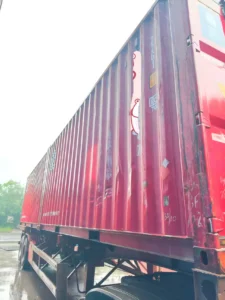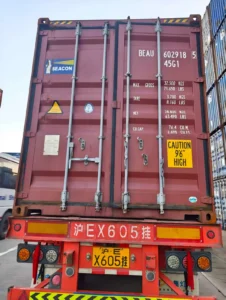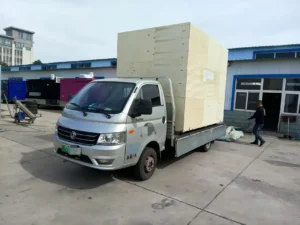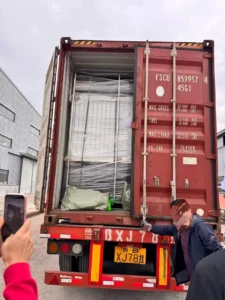
The China to Canada shipping cost depends on much more than the ocean freight rate shown on a carrier quotation.
The final transportation cost can include factory pickup in China, export handling, container loading, ocean or air freight, Canadian terminal charges, customs clearance, duties and taxes, rail transportation, trucking and final delivery.
For this reason, two shipments using the same container size can have very different total costs.
A 40HQ shipped from Shanghai to Vancouver port, for example, will have a different total logistics cost from a 40HQ collected from an inland Chinese factory and delivered through Vancouver to a warehouse in Toronto.
BRF SHIPPING calculates the complete logistics route according to your:
- Chinese pickup location
- Canadian destination
- Cargo type
- HS code
- Weight and volume
- Container type
- Shipping method
- Cargo-ready date
- Incoterm
- Customs requirements
- Final delivery postcode
If you need a complete overview of transportation methods, customs and delivery options, visit our Shipping from China to Canada guide.
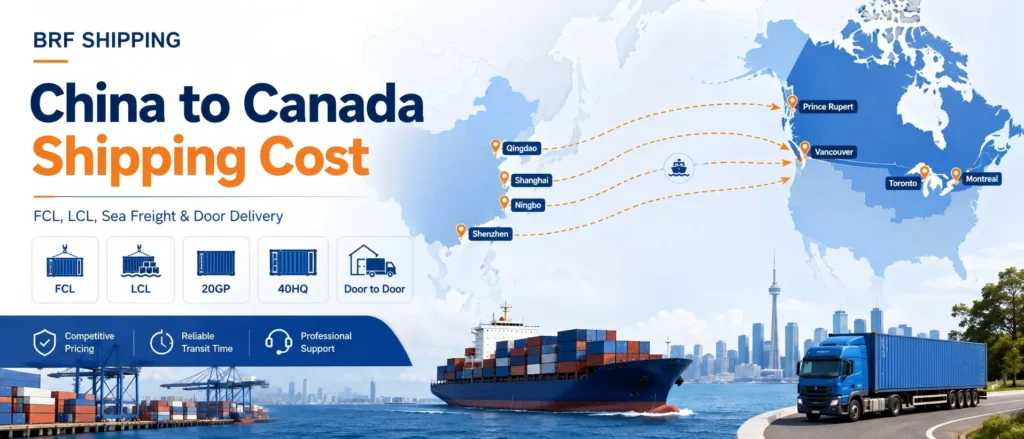
How Much Does Shipping from China to Canada Cost?
There is no single fixed China to Canada shipping cost.
International freight rates change according to carrier capacity, container availability, fuel surcharges, season, origin port, destination and market demand.
The first step is therefore to identify which shipping method your cargo requires.
| Shipping Method | How Cost Is Usually Calculated | Best For |
|---|---|---|
| LCL Sea Freight | CBM / chargeable volume or weight | Small commercial shipments |
| 20GP FCL | Rate per container | Dense or heavy cargo |
| 40GP FCL | Rate per container | Larger general cargo |
| 40HQ FCL | Rate per container | High-volume or bulky cargo |
| Air Freight | Chargeable weight per kg | Urgent cargo |
| Door-to-Door | Complete logistics quotation | Importers requiring final delivery |
| DDP Shipping | Route + customs + duty/tax + delivery | Suitable turnkey shipments |
Freight prices can change frequently, so container or LCL figures shown online should normally be treated as budgeting references rather than guaranteed booking rates.
For an actual shipment, BRF SHIPPING recommends calculating the complete route from the Chinese supplier to the final Canadian destination.
What Is Included in China to Canada Shipping Cost?
A useful freight quotation should clearly separate the individual cost components.
The total China to Canada shipping cost can normally be divided into five stages.
1. China Factory Pickup
If the supplier does not deliver directly to the export port or warehouse, the shipment may require inland trucking.
The pickup cost depends on:
- Factory location
- Distance to port
- Cargo weight
- Truck type
- Container loading method
- Toll charges
- Waiting time
- Special equipment requirements
Factories located close to Shanghai, Ningbo, Qingdao, Shenzhen, Guangzhou or Tianjin may have different inland costs from suppliers located further inland.
BRF SHIPPING can collect cargo directly from the supplier and move it to the appropriate export warehouse or container loading point.
2. China Origin Charges
Origin costs may include:
- Warehouse receiving
- LCL handling
- Palletizing
- Repacking
- Container loading
- Container trucking
- Export customs declaration
- Documentation
- Terminal handling
- VGM
- Shipping instructions
- Bill of lading charges
These charges should be considered when comparing freight quotations.
A quotation with a very low ocean freight rate does not necessarily result in the lowest total shipping cost.
FCL China to Canada Shipping Cost
FCL means Full Container Load.
The importer books an entire container rather than sharing container space with other shipments.
The most commonly used dry containers are:
20GP Container
A 20GP is commonly selected for relatively dense cargo or shipments where the available volume does not justify a larger container.
Typical cargo includes:
- Machinery
- Metal products
- Building materials
- Equipment
- Industrial parts
- Dense packaged products
The shipping quotation is normally based on one complete 20GP container rather than a CBM rate.
20ft Container Shipping Cost from China to Canada
40GP Container
A 40GP provides considerably more loading space than a 20GP and is widely used for general commercial shipments.
Whether a 40GP provides better value depends on cargo volume, weight and the difference between 20GP and 40GP ocean freight rates at the time of booking.
40HQ Container
A 40HQ is one of the most commonly used container types for large-volume exports from China.
It is particularly useful for:
- Furniture
- Aluminum products
- Building materials
- Consumer goods
- Packaging
- Fitness equipment
- Automotive parts
- E-commerce inventory
- Lightweight bulky cargo
Because a 40HQ provides additional internal height, it can reduce the effective freight cost per cubic meter when cargo utilization is high.
For more information about container transportation, carrier booking and FCL/LCL options, see our Sea Freight from China service page.
40ft Container Shipping Cost from China to Canada
LCL China to Canada Shipping Cost
LCL means Less than Container Load.
Instead of paying for an entire container, multiple importers share container space.
LCL is usually suitable when the shipment is too small to justify FCL.
The cost is normally calculated according to chargeable volume or weight.
For example, an importer shipping:
- 2 CBM
- 5 CBM
- 8 CBM
- 10 CBM
may find LCL more practical than booking a complete container.
However, importers should not compare only the basic ocean freight per CBM.
LCL shipments can also include:
- China CFS handling
- Documentation
- Consolidation
- Export customs clearance
- Ocean freight
- Canadian CFS charges
- Deconsolidation
- Customs brokerage
- Warehouse handling
- Final truck delivery
As shipment volume increases, the difference between LCL and FCL should be recalculated.
At a certain volume, moving the cargo in a dedicated 20GP may provide better overall value.
Shipping less than a full container? See our detailed
LCL Shipping Cost from China to Canada
guide for CBM pricing, CFS charges, customs and Canadian door-delivery costs.
China to Canada Shipping Cost by Route
The export and destination ports can significantly affect the final price.
Common China–Canada routes include:
| China Origin | Canada Gateway | Typical Application |
|---|---|---|
| Shanghai | Vancouver | Eastern China exports |
| Ningbo | Vancouver | Zhejiang and surrounding factories |
| Shenzhen / Yantian | Vancouver | South China exports |
| Guangzhou / Nansha | Vancouver | Guangdong cargo |
| Qingdao | Vancouver | North China manufacturing |
| Tianjin / Xingang | Vancouver | Northern China cargo |
| China | Prince Rupert | Western gateway and inland rail |
| China | Montreal | Eastern Canadian distribution |
| China | Halifax | Atlantic Canada and eastern markets |
The cheapest ocean freight rate is not always the cheapest total route.
For example, cargo ultimately delivered to Toronto may require:
China factory → China port → Vancouver → rail → Toronto → truck delivery
or an alternative eastern Canadian routing.
The correct comparison is therefore the complete transportation cost to the final delivery point.
Vancouver vs Toronto Shipping Cost
Vancouver is one of the principal ocean gateways used for China–Canada container shipments.
Cargo can arrive at Vancouver and then move by truck or rail to destinations such as:
- Vancouver
- Calgary
- Edmonton
- Winnipeg
- Toronto
- Other inland locations
For a Vancouver-area importer, local delivery may represent a relatively small portion of the total logistics cost.
For cargo destined for Toronto, however, inland rail and truck transportation become an important part of the quotation.
This is why a customer asking for the China to Canada shipping cost should provide the final Canadian postcode rather than requesting only a port-to-port rate.
China to Canada Door-to-Door Shipping Cost
Door-to-door shipping combines the international freight with origin and destination logistics.
A typical shipment can include:
Supplier Pickup in China
↓
China Warehouse or Container Loading
↓
Export Customs Clearance
↓
Ocean Freight
↓
Canadian Port Arrival
↓
Customs Clearance
↓
Rail or Truck Transportation
↓
Final Warehouse Delivery
Door-to-door pricing is especially useful for importers that want to understand the total logistics budget before placing an order with a Chinese supplier.
BRF SHIPPING can arrange delivery to commercial destinations including:
- Vancouver
- Toronto
- Montreal
- Calgary
- Edmonton
- Winnipeg
- Ottawa
- Halifax
- Other Canadian destinations
Port-to-Port vs Door-to-Door Cost
One of the most common mistakes when comparing freight quotations is comparing different service scopes.
Port-to-Port Quote
This normally covers the international shipping portion between the agreed origin and destination ports.
Additional costs may still arise for:
- Destination terminal charges
- Customs clearance
- Duties
- Taxes
- Rail transportation
- Truck delivery
- Storage
- Demurrage
- Detention
Door-to-Door Quote
A door-to-door quotation can include a much larger part of the transportation chain.
Although the quoted number is higher, it may provide a more useful basis for calculating the actual landed logistics cost.
Always compare quotations with the same Incoterm and service scope.
Customs, Duties and Taxes
Freight cost and import tax are not the same thing.
Canadian import costs can include:
- Customs duty
- GST
- Customs brokerage
- Import processing
- Product-specific fees
- Inspection charges when applicable
For most goods imported into Canada, the federal GST rate is 5%, although the actual customs treatment depends on the goods, classification, origin and import circumstances.
Commercial importers should also ensure the appropriate Canadian importer and CARM arrangements are established before shipment.
BRF SHIPPING can coordinate with the importer and customs broker so these requirements are considered when preparing the transportation plan.
What Factors Increase China to Canada Shipping Cost?
Several factors can increase the final freight cost.
Peak Shipping Seasons
Container demand can rise before major retail seasons and Chinese holidays.
Higher demand can affect:
- Freight rates
- Equipment availability
- Vessel space
- Sailing schedules
Final Delivery Distance
A container delivered close to Vancouver will normally have a different inland transportation cost from cargo delivered to Toronto, Calgary or another inland Canadian city.
Heavy Cargo
Heavy containers may require specific equipment, route planning or truck arrangements.
The cargo weight should always be provided before quotation.
Oversized Cargo
Cargo that cannot fit into a standard container may require:
- Open-top container
- Flat rack
- Special loading
- Lashing
- Crane service
- Oversized trucking
This changes the cost structure significantly.
Dangerous Goods
Hazardous cargo may require:
- MSDS
- DG declaration
- Carrier approval
- Special packing
- Additional surcharges
Cargo details should be confirmed before booking.
Port and Rail Congestion
Congestion can increase:
- Storage
- Waiting time
- Demurrage
- Detention
- Rail delays
- Truck appointment costs
Planning sufficient free time can therefore be as important as negotiating the ocean freight rate.
How to Reduce China to Canada Shipping Cost
Importers can often lower their logistics costs by improving the shipment plan before booking.
Consolidate Multiple Suppliers
Instead of shipping several small consignments individually, BRF SHIPPING can collect goods from multiple Chinese suppliers and consolidate them.
This can reduce repeated:
- Pickup costs
- Documentation charges
- Export handling
- Minimum freight charges
Compare LCL and FCL
Do not automatically select LCL simply because your cargo does not completely fill a container.
For larger LCL volumes, ask for both:
LCL quotation
and
20GP FCL quotation
Then compare total destination costs.
Improve Container Utilization
Better packaging can increase container utilization.
Reducing unnecessary packaging volume can lower the freight cost per product.
This is especially important for lightweight bulky cargo.
Choose the Correct China Port
The closest export port is not always the cheapest total option.
BRF SHIPPING can compare ports such as:
- Qingdao
- Shanghai
- Ningbo
- Shenzhen
- Guangzhou
- Tianjin
- Xiamen
- Dalian
according to the supplier location and sailing schedule.
Book Before Cargo Is Ready
Waiting until the final day to request space can reduce carrier choices.
Providing cargo information early allows more time to compare:
- Carriers
- ETD
- Transit time
- Container availability
- Routing
- Free time
- Total cost
How BRF SHIPPING Calculates Your Shipping Cost
To calculate an accurate quotation, send the following information.
China Origin
Supplier city or full pickup address.
Canadian Destination
Port, warehouse address or postal code.
Cargo Description
Product name and HS code if available.
Packages
Number and type of cartons, pallets, crates or other packages.
Cargo Dimensions
Length × width × height.
Gross Weight
Total shipment weight.
Cargo Volume
Total CBM for LCL shipments.
Container Type
For example:
- 20GP
- 40GP
- 40HQ
- Open Top
- Flat Rack
- Reefer
Cargo-Ready Date
The approximate date when the supplier can release the goods.
Incoterm
For example:
- EXW
- FOB
- CIF
- CFR
- DAP
- DDP
With this information, BRF SHIPPING can compare the available transportation options and calculate a more realistic China to Canada shipping cost.
Example China to Canada Cost Structure
A complete FCL quotation might look like this:
China factory pickup
Container trucking
China export customs
Origin terminal charges
Ocean freight
Canada destination charges
Customs brokerage
Duty and GST
Rail transportation if required
Final truck delivery
=
Total China to Canada Shipping Cost
This is a much more useful number for purchasing and supply-chain planning than the basic ocean freight rate alone.
Why the Lowest Freight Rate Is Not Always the Lowest Cost
Importers should compare quotations based on the total logistics result rather than the headline freight rate.
A cheap freight rate can become expensive if it includes:
- Long transshipment
- Limited free time
- High destination charges
- Expensive rail connections
- Slow container release
- Additional handling
- Unexpected delivery costs
BRF SHIPPING therefore compares the complete route rather than simply selecting the lowest carrier rate.
China to Canada Shipping Cost FAQ
What is the average China to Canada shipping cost?
There is no single average price that applies to every shipment. Cost depends on cargo volume, container type, Chinese origin, Canadian destination, shipping method, season and required delivery service.
For an accurate rate, provide the pickup city, destination postcode, cargo dimensions, weight and cargo-ready date.
Is a 40HQ much more expensive than a 20GP?
Not necessarily.
A 40HQ provides substantially more loading volume, while its ocean freight rate is not always proportionally higher than a 20GP.
For lightweight or bulky cargo, a 40HQ can therefore provide a lower transportation cost per cubic meter.
Is LCL cheaper than FCL from China to Canada?
For small shipments, LCL is usually more practical because you only pay for part of a container.
As shipment volume increases, however, LCL consolidation and destination charges can make a 20GP FCL more competitive.
Always compare both options when cargo volume becomes significant.
What is the cheapest way to ship from China to Canada?
For larger commercial shipments where transit time is flexible, ocean freight is generally the preferred cost-efficient method.
Smaller shipments may use LCL, while larger cargo volumes can use FCL.
The cheapest method depends on the complete door-to-door cost rather than only the international freight rate.
Does the freight quote include Canadian customs duty?
Not automatically.
The quotation should clearly state whether customs brokerage, duties, GST and other destination costs are included.
The service scope depends on the agreed Incoterm and quotation.
Can BRF SHIPPING provide door-to-door delivery in Canada?
Yes.
BRF SHIPPING can coordinate factory pickup in China, export handling, international freight, customs-broker coordination and final delivery to suitable commercial destinations in Canada.
For a full overview of the Canada service, visit our Shipping from China to Canada page.
Can I get a current container rate?
Yes.
Because freight rates can change frequently, the best approach is to request a quotation using the actual cargo-ready date, container size, origin and destination.
Get a China to Canada Shipping Cost Quote
Need to know your actual China to Canada shipping cost?
Send BRF SHIPPING:
- Chinese supplier address
- Canadian delivery address or postcode
- Product name
- HS code if available
- Number of packages
- Dimensions
- Gross weight
- Total CBM
- Container type
- Cargo-ready date
- Incoterm
We can compare the available FCL, LCL and door-to-door options and prepare a practical transportation plan for your shipment.
BRF SHIPPING
China Pickup → Export Customs → Sea Freight → Canada Customs → Rail / Truck → Door Delivery
Explore Shipping from China to Canada
Request Your China to Canada Shipping Cost Quote