How much does it cost to ship a 20ft container from China to Germany ?
For many German importers, a 20GP container is one of the most practical options for shipping heavy or medium-volume commercial cargo from China. It is commonly used for machinery, metal products, aluminum fencing, fitness equipment, building materials, industrial components, automotive parts and other dense cargo that does not require the additional volume of a 40ft container.
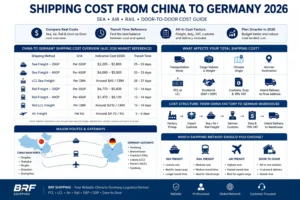
As of August 2026, public market references place the 20ft container shipping cost from China to Germany at approximately:
USD 2,295–2,805 per 20GP
for selected base sea-freight services into Hamburg and Bremen/Bremerhaven.
A live Shanghai–Hamburg FCL inquiry dated August 24, 2026 showed a quoted 20GP rate of approximately USD 2,725, which sits inside that broader market range.
However, this is normally the ocean freight portion, not the total cost of moving the container from a Chinese factory to a German warehouse.
A complete China-to-Germany 20ft container quotation can include:
Factory Pickup + Export Handling + Ocean Freight + German Destination Charges + Customs + Duty + VAT + Inland Delivery
This guide explains how each part affects the final cost.
20ft Container Shipping Cost from China to Germany: Quick Overview
| Item | 2026 Planning Reference |
|---|---|
| Container Type | 20GP / 20ft General Purpose |
| Base Ocean Freight | Approx. USD 2,295–2,805 |
| Main German Gateways | Hamburg / Bremerhaven |
| Typical Ocean Transit | Approx. 25–33 days |
| Best For | Heavy or medium-volume commercial cargo |
| FCL | Yes |
| China Factory Pickup | Available |
| German Customs | Required |
| Standard German Import VAT | Generally 19% |
| Final Truck Delivery | Available |
| Door-to-Door | DAP / DDP subject to shipment structure |
August 2026 market data shows 20GP China–Germany ocean rates falling roughly 20% from July levels, when comparable references were around USD 2,790–3,410. That illustrates why container prices should always be treated as current market rates rather than annual fixed prices.
What Is a 20GP Container?
A standard 20ft dry container is generally called:
20GP
or
20DC
depending on the carrier and booking system.
It is one of the most common container types used in international freight.
A standard 20GP is approximately:
- 20 feet long
- 8 feet wide
- 8 feet 6 inches high externally
- Around 33 CBM theoretical internal capacity
The actual usable cargo volume is lower because of packaging, pallet dimensions, loading method and cargo shape.
For many commercial shipments, practical loading may be roughly around:
25–28 CBM
depending on how the goods are packed.
A 20GP is particularly useful for heavy cargo, because the cargo often reaches a practical weight limit before filling the entire cubic capacity.
How Much Is a 20ft Container from China to Germany?
For August 2026, a practical market reference for base ocean freight is approximately:
USD 2,295–2,805 per 20GP
to Hamburg or Bremen-area gateways.
However, that does not mean every shipment will cost USD 2,500.
Your actual China to Germany 20ft container rate depends on:
- Chinese port of loading
- German port of discharge
- Shipping line
- Direct or transshipment service
- Cargo weight
- Cargo type
- Container availability
- Sailing date
- Peak-season surcharge
- Fuel surcharge
- Origin charges
- German destination charges
- Final postcode
- Incoterm
Therefore, a proper quotation should always specify exactly what is included.
August 2026 20GP Market Rate Trend
The China–Germany container market changed significantly between July and August 2026.
Published July references showed approximately:
USD 2,790–3,410 / 20GP
while August references moved down to approximately:
USD 2,295–2,805 / 20GP
for Hamburg and Bremen-area services.
That is an important lesson for importers:
Do not build annual landed-cost calculations using one freight rate.
Container rates can change because of:
- Peak season
- Blank sailings
- Vessel capacity
- Carrier surcharges
- Routing disruptions
- Equipment availability
- Fuel prices
- Port congestion
For regular imports, BRF SHIPPING recommends updating the freight budget before each booking cycle.
20ft Container Cost from Major Chinese Ports to Germany
The origin port can change both the ocean freight rate and the total logistics cost.
The most common China gateways include:
- Qingdao
- Shanghai
- Ningbo
- Shenzhen
- Guangzhou / Nansha
- Tianjin
- Xiamen
The cheapest ocean rate is not necessarily the cheapest total route.
For example, if the factory is in Shandong Province, trucking the container to Shanghai simply to obtain a slightly lower ocean rate may increase the final cost.
The correct comparison is:
Factory → China Port → Germany Port → German Destination
not simply:
Port → Port
Shanghai to Germany 20ft Container Cost
Shanghai is one of the largest gateways for China–Germany FCL shipping.
It is especially suitable for factories in:
- Shanghai
- Suzhou
- Kunshan
- Wuxi
- Changzhou
- Southern Jiangsu
A recent Shanghai-to-Hamburg inquiry dated August 24, 2026 showed:
20GP: USD 2,725
for the listed port-to-port service.
This is useful as a real August market reference, but it should not be interpreted as a guaranteed BRF SHIPPING rate.
The final quotation can change according to:
- Cargo-ready date
- Carrier
- Container availability
- VGM / weight
- Origin terminal charges
- Shipping-line validity
- Destination services
Ningbo to Germany 20ft Container Cost
Ningbo is often a better origin gateway for factories in Zhejiang Province.
Typical production locations include:
- Ningbo
- Hangzhou
- Yiwu
- Shaoxing
- Taizhou
For Zhejiang manufacturers, using Ningbo can reduce origin trucking compared with moving the container to Shanghai.
A typical route is:
Zhejiang Factory → Ningbo Port → Hamburg / Bremerhaven → German Customs → Final Delivery
The correct rate should therefore include both:
China Origin Trucking
and
Ocean Freight
when comparing Ningbo with Shanghai.
Qingdao to Germany 20ft Container Cost
Qingdao is a major export gateway for Shandong and northern China.
It is particularly suitable for cargo from:
- Qingdao
- Weifang
- Zibo
- Jinan
- Linyi
- Dezhou
- Yantai
- Weihai
Typical German-bound products include:
- Aluminum fencing
- Aluminum gates
- Fitness equipment
- Machinery
- Metal products
- Building materials
- Industrial equipment
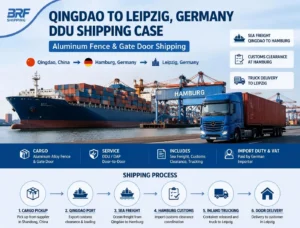
A common BRF SHIPPING routing structure is:
Shandong Factory → Qingdao Port → Hamburg → German Customs → Final German Address
For Shandong suppliers, Qingdao can reduce China inland transportation compared with Shanghai or Ningbo.
Shenzhen to Germany 20ft Container Cost
Shenzhen, particularly Yantian, is one of the key South China gateways.
It is useful for suppliers in:
- Shenzhen
- Dongguan
- Huizhou
- Guangdong manufacturing areas
Products commonly shipped include:
- Electronics
- Machinery
- Lighting
- Consumer products
- Furniture
- Industrial parts
A South China rate should be compared against Guangzhou/Nansha according to the supplier’s exact location and sailing schedule.
Guangzhou / Nansha to Germany
Nansha can be practical for suppliers around:
- Guangzhou
- Foshan
- Zhongshan
- Western Pearl River Delta
The correct origin port should be selected according to:
Truck Cost + Sailing Schedule + Freight Rate + Transit Time
rather than carrier ocean rate alone.
Hamburg vs Bremerhaven for a 20ft Container
Germany’s two most important container gateways for China cargo are:
Hamburg
and
Bremerhaven
Both can serve German inland markets.
The correct choice depends on:
- Ocean rate
- Shipping-line service
- Vessel schedule
- Terminal conditions
- German destination
- Rail connection
- Trucking rate
For example:
Option A
China → Hamburg
Ocean freight: lower
Final delivery to customer: higher
Option B
China → Bremerhaven
Ocean freight: slightly higher
Final delivery: lower
Option B could still produce the lower total cost.
Always compare the delivered cost to the German postcode.
20ft Container Shipping Cost to Hamburg
Hamburg is one of BRF SHIPPING’s main Germany gateways.
Typical cost components include:
China Origin
- Factory pickup
- Container positioning
- Loading
- Export customs
- Documentation
- Terminal charges
Ocean Freight
- Basic ocean freight
- Carrier surcharges
- Fuel-related charges
- Peak-season surcharges where applicable
Hamburg Destination
- Terminal handling
- Customs brokerage
- Import duty
- Import VAT
- Examination charges if applicable
- Truck or rail delivery
- Empty-container return
Therefore:
USD 2,500 Ocean Freight
does not mean:
USD 2,500 Door-to-Door Cost.
The distinction is extremely important when comparing quotations.
How Long Does a 20ft Container Take from China to Germany?
Current August 2026 references put typical China-to-Hamburg/Bremen ocean transit at approximately:
25–33 days
for selected FCL services.
However, port-to-port transit is only part of the total shipping timeline.
The complete process may include:
Factory Pickup
↓
Container Loading
↓
Export Customs
↓
China Terminal
↓
Vessel Departure
↓
Ocean Transit
↓
Hamburg / Bremerhaven Arrival
↓
German Customs
↓
Container Release
↓
Final Truck Delivery
A realistic door-to-door schedule should include time before and after the vessel voyage.
20ft Container Port-to-Port vs Door-to-Door Cost
This is one of the biggest sources of misunderstanding when comparing freight quotes.
Port-to-Port
Usually covers primarily:
China Port → German Port
It may exclude:
- China pickup
- Factory loading
- German customs
- Taxes
- Truck delivery
Door-to-Door
Can cover:
China Factory → German Warehouse
and may include:
- Pickup
- Export clearance
- Main freight
- Destination handling
- Customs coordination
- Truck delivery
However, duty and VAT inclusion depends on whether the shipment is DAP, DDP or another agreed structure.
20ft Container Cost Breakdown Example
Assume a German importer buys machinery in Shandong.
The shipment requires one 20GP.
A simplified logistics budget could look like this:
| Cost Component | Example |
|---|---|
| China Factory Pickup | Variable |
| Container Loading | Variable |
| Export Customs | Variable |
| Origin Charges | Variable |
| Ocean Freight | Approx. USD 2,295–2,805 market reference |
| Hamburg Charges | Variable |
| Customs Brokerage | Variable |
| Customs Duty | Depends on TARIC |
| Import VAT | Generally 19% standard rate |
| German Truck Delivery | Depends on postcode |
This explains why the total delivered cost cannot be calculated from ocean freight alone.
Germany Import Duty for a 20ft Container
Customs duty is not charged according to container size.
A 20ft container does not have a special German duty rate.
Instead, duty depends on the goods inside the container.
Relevant factors include:
- Product type
- CN / TARIC code
- Country of origin
- Customs value
- EU trade measures
- Anti-dumping duty where applicable
For example:
A 20GP containing machinery can have a different duty treatment from a 20GP containing:
- Aluminum products
- Furniture
- Textiles
- Automotive components
Therefore:
Container Type Does Not Determine Customs Duty.
The product classification does.
Germany Import VAT on a 20ft Container
Germany generally applies a standard import VAT rate of:
19%
subject to the product and applicable tax treatment.
Again, VAT is not calculated according to the physical size of the container.
The tax calculation depends on the customs-value and import-tax rules applying to the cargo.
German import VAT can therefore be significantly larger than the ocean freight itself when the goods have a high commercial value.
Example: 20GP Landed Cost Calculation
Assume:
Goods value:
EUR 40,000
Relevant international freight and customs-value costs:
EUR 3,000
Simplified customs value:
EUR 43,000
Assume, purely as an example:
Customs duty rate:
4%
Duty:
EUR 1,720
Simplified VAT base before other applicable additions:
EUR 44,720
At 19% import VAT:
EUR 8,496.80
The buyer therefore needs to plan for much more than the container ocean freight.
The final landed cost can also include:
- Customs brokerage
- Terminal charges
- Inland delivery
- Storage
- Inspection
- Other customs-related adjustments
The exact TARIC rate must be checked for the actual goods.
Can a German Company Reclaim the 19% Import VAT?
For an eligible German business, import VAT may generally be deductible as input VAT when the legal and documentation requirements are satisfied.
This means importers should distinguish between:
Customs Duty
which is normally part of the import cost,
and
Import VAT
which may be deductible by qualifying businesses.
This is especially important when deciding whether to use:
- DAP
- DDP
- Own customs broker
- Third-party importer arrangement
BRF SHIPPING’s separate Germany Import VAT and Duty guide should remain the main page covering EORI, TARIC, VAT deduction and German tax issues.
DAP 20ft Container Shipping to Germany
DAP can be practical for an established German importer.
A typical structure is:
China Factory
↓
Pickup
↓
Export Customs
↓
20GP Ocean Freight
↓
Hamburg / Bremerhaven
↓
German Importer Customs Clearance
↓
Duty / VAT
↓
Truck Delivery
Under the agreed Incoterm, the German importer normally retains the relevant import responsibility.
This can be suitable for companies that already have:
- EORI
- German VAT registration
- Customs broker
- Regular import operations
DDP 20ft Container Shipping from China to Germany
DDP involves a wider scope.
The quotation may coordinate:
- China pickup
- Container loading
- Export declaration
- Ocean freight
- German customs
- Tax arrangements
- Inland delivery
However:
DDP Does Not Mean Tax-Free Shipping.
Customs duty and import VAT still need a compliant legal structure.
Before shipping a 20GP DDP to Germany, confirm:
- Importer of record
- EORI
- VAT arrangement
- Customs duty
- Product compliance
- Final consignee
- German delivery address
A dedicated DDP Shipping from China to Germany page should cover this search intent in greater depth.
20GP vs 40GP: Which Is Cheaper?
A 20GP naturally has a lower absolute ocean freight cost than a 40ft container.
Current August 2026 references illustrate this:
| Container | Approx. Base Ocean Rate |
|---|---|
| 20GP | USD 2,295–2,805 |
| 40GP | USD 4,095–5,005 |
But 40GP can have a lower cost per cubic metre because it provides significantly more capacity without doubling the freight.
Therefore:
Use 20GP when:
- Cargo is dense
- Shipment volume is moderate
- Cargo reaches weight limits quickly
- You do not need a large cubic capacity
Consider 40GP / 40HQ when:
- Cargo is bulky
- Volume is high
- Weight is relatively low
- You can fill more container space
The next dedicated cost page should separately target:
40ft Container Shipping Cost from China to Germany
so this article remains focused on 20GP search intent.
20GP vs LCL
For small shipments, LCL can be more economical.
But as cargo volume increases, LCL costs can accumulate through:
- Freight per CBM
- CFS charges
- Consolidation
- Deconsolidation
- Destination handling
At a certain shipment size, a full 20GP may provide better value.
There is no universal CBM break-even point.
BRF SHIPPING can compare:
LCL Total Delivered Cost
against:
20GP FCL Total Delivered Cost
before booking.
What Cargo Is Suitable for a 20ft Container?
20GP is particularly useful for heavy commercial cargo.
Examples include:
Machinery
Industrial equipment and machine parts often fit well in 20GP because of their weight.
Aluminum Products
Including:
- Aluminum fencing
- Aluminum gates
- Aluminum profiles
- Metal components
Fitness Equipment
Heavy gym and fitness machinery can be suitable for 20GP.
Building Materials
Dense construction materials can often reach container weight before volume becomes the main limitation.
Automotive Parts
Metal and industrial components are common 20GP cargo.
General Industrial Cargo
Other dense products can also be suitable depending on packaging and dimensions.
Heavy Cargo and 20GP Weight
One of the most important advantages of the 20GP is its suitability for dense cargo.
But importers should not assume:
“If it physically fits, it can ship.”
Container payload, road-weight limits, terminal restrictions and local trucking regulations must also be considered.
Before loading heavy products, provide:
- Total gross weight
- Package weight
- Weight distribution
- Packing dimensions
- Pallet information
BRF SHIPPING can review the routing before the container is loaded.
What Is Included in a BRF SHIPPING 20GP Quote?
Depending on the requested service, a quotation may include:
China Side
- Supplier pickup
- Empty-container positioning
- Warehouse handling
- Container loading
- Export declaration
- Origin terminal handling
- Documentation
International Freight
- 20GP booking
- Ocean freight
- Carrier surcharges
Germany Side
- Destination coordination
- Customs broker support
- Container release
- Inland trucking
- Empty-return arrangement
Duty, VAT and other customs charges depend on the agreed Incoterm and importer structure.
How to Reduce 20ft Container Shipping Cost from China to Germany
1. Use the Correct Origin Port
Do not automatically move every container to Shanghai.
Examples:
Shandong → Qingdao
Zhejiang → Ningbo
Guangdong → Shenzhen / Nansha
Fujian → Xiamen
A lower inland truck cost can offset a small difference in ocean freight.
2. Book Before Peak Season
Avoid last-minute bookings around:
- Chinese New Year
- Golden Week
- Peak European import periods
Container availability and surcharges can change quickly.
3. Optimize Container Loading
Good packaging can increase usable container space.
For dense cargo, it can also improve weight distribution and cargo safety.
4. Compare Hamburg and Bremerhaven
Do not choose the destination port purely according to the ocean rate.
Compare:
Ocean Freight + Port Charges + Final German Delivery
5. Provide the Final Postcode
German trucking cost can materially affect the total freight budget.
A Hamburg delivery and a Munich delivery do not have the same inland cost.
6. Avoid Demurrage and Detention
Customs documents should be prepared before vessel arrival.
Delays can lead to:
- Terminal storage
- Demurrage
- Detention
- Truck rescheduling
These charges can quickly eliminate the savings achieved through a low freight rate.
Why Freight Rates Change Every Month
The July-to-August 2026 market movement illustrates how quickly container costs can change.
Published rates fell from roughly USD 2,790–3,410 in July to USD 2,295–2,805 in August for selected 20GP China–Germany services.
Important market variables include:
- Vessel capacity
- Carrier pricing
- Peak-season surcharges
- Route disruptions
- Fuel
- Container availability
- Port congestion
- Demand
For this reason, an SEO article can provide a useful market reference, but importers should obtain a fresh freight quote before booking.
20ft Container from China to Germany: Complete Shipping Process
A typical BRF SHIPPING FCL process can be structured as:
Step 1 — Cargo Details
Provide:
- Product
- Supplier address
- Packages
- Gross weight
- CBM
- Cargo-ready date
- German postcode
Step 2 — Select Origin Port
Compare Qingdao, Shanghai, Ningbo, Shenzhen or another gateway based on the supplier location.
Step 3 — Position the Container
The empty 20GP is arranged for warehouse or factory loading.
Step 4 — Load and Seal
Cargo is loaded and the container is sealed.
Step 5 — Export Customs
China export declaration and required documents are completed.
Step 6 — Ocean Freight
The 20GP sails to Hamburg or Bremerhaven.
Step 7 — German Customs
Import documentation is processed.
Step 8 — Container Release
After customs and terminal procedures, the container becomes available for inland transport.
Step 9 — Truck Delivery
The container is delivered to the consignee.
Step 10 — Empty Return
The empty container is returned to the designated depot within the free-time requirements.
Documents Required for 20GP Shipping to Germany
Typical commercial documents include:
- Commercial invoice
- Packing list
- Bill of lading
- Export declaration
- Product description
- HS / TARIC information
- Country of origin
- EORI
- Importer information
- Product certificates where required
Special products may require additional compliance documentation.
Common 20ft Container Shipping Mistakes
Comparing Only Ocean Freight
Always compare total logistics cost.
Choosing the Wrong China Port
Factory location matters.
Ignoring German Inland Delivery
Hamburg is often only the gateway.
Incorrect HS Code
Classification affects customs duty and regulatory treatment.
Missing EORI
Customs problems can delay release.
Underestimating Container Weight
Heavy cargo should be checked before loading.
Booking Too Late
Last-minute shipments can face higher rates or limited equipment.
20ft Container Shipping Cost from China to Germany FAQ
How much does a 20ft container cost from China to Germany in 2026?
August 2026 public market references indicate approximately USD 2,295–2,805 for selected base 20GP ocean services to Hamburg/Bremen-area gateways. Actual rates depend on origin, carrier, sailing date and service scope.
How much is Shanghai to Hamburg for a 20GP?
A Shanghai-to-Hamburg FCL inquiry with a cargo-ready date of August 24, 2026 showed a quoted 20GP price of approximately USD 2,725 for the listed port-to-port service.
How long does a 20ft container take from China to Germany?
Selected August 2026 market references show approximately 25–33 days port-to-port for China–Germany FCL services.
Is 20GP cheaper than 40GP?
The total freight charge is normally lower, but 40GP can provide a lower transportation cost per cubic metre.
Is 20GP cheaper than LCL?
For small cargo, LCL may be cheaper. For larger volumes or dense cargo, 20GP FCL can become more economical when destination handling is considered.
Which German port is best for a 20ft container?
Hamburg and Bremerhaven are both important gateways. The best port depends on the carrier schedule, ocean rate and final German destination.
Is German customs duty included in the ocean freight rate?
Normally no. Customs duty depends on the goods and TARIC classification.
Is German import VAT included?
Not normally unless the quotation explicitly provides a compliant tax-inclusive service. Germany’s standard import VAT rate is generally 19%.
Can BRF SHIPPING pick up my container from a Chinese factory?
Yes. Factory pickup, loading, export customs and international freight can be coordinated depending on the shipment.
Can BRF SHIPPING deliver the 20GP to my warehouse in Germany?
Yes. Door delivery can be arranged after German customs clearance depending on the destination and agreed Incoterm.
Get a 20ft Container Shipping Quote from China to Germany
For an accurate 20ft container shipping cost from China to Germany, provide BRF SHIPPING with:
China Factory Address
Product Description
HS Code
Cargo Weight
Cargo Volume
20GP
German Destination Postcode
Cargo-Ready Date
Incoterm
BRF SHIPPING can then compare:
China Pickup → Origin Port → Ocean Freight → Hamburg / Bremerhaven → German Customs → Final Delivery
instead of quoting only the ocean freight component.
BRF SHIPPING
20GP FCL Shipping from China to Germany
China Factory Pickup → Container Loading → Sea Freight → German Customs → Door Delivery