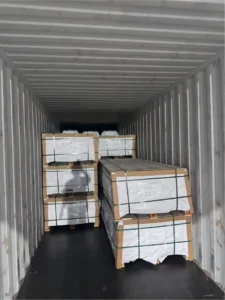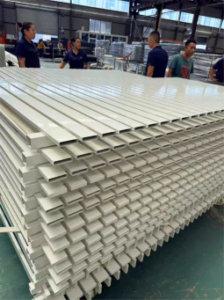
Shipping heavy steel products from China to Australia requires careful logistics planning, particularly when ocean carriers impose additional requirements for container loading, cargo securing, and inspection documentation.
In this shipment, BRF Logistics arranged the transportation of approximately 20 metric tons of steel angles (STEEL ANGLES) from Qingdao, China, to Sydney, Australia, under CIF shipping terms.
One of the key challenges was the shipping line’s requirement for a cargo inspection report. To meet this requirement, our team coordinated with a qualified third-party inspection agency possessing relevant customs-related qualifications to arrange the necessary inspection and report.
1. Shipment Overview
| Shipment Details | Information |
|---|---|
| Commodity | STEEL ANGLES (Steel Angle Bars) |
| Port of Loading | Qingdao, China |
| Port of Discharge | Sydney, Australia |
| Shipping Terms | CIF |
| Cargo Quantity | 1 cargo piece / package |
| Cargo Weight | Approximately 20,000 KGS |
| Transportation Mode | Containerized Ocean Freight |
| Booking Arrangement | BRF Logistics |
| Inland Trucking | BRF Logistics |
| Container Loading | Factory |
| Cargo Securing & Lashing | Factory |
| Third-Party Inspection Coordination | BRF Logistics |
| Inspection Report | Arranged through a qualified inspection agency |
2. Customer Requirements and Shipping Challenges
The steel manufacturer contacted BRF Logistics to arrange an ocean freight booking from Qingdao to Sydney.
Although the factory was responsible for container loading and cargo securing, the shipment required additional coordination due to the cargo’s heavy weight and the shipping line’s inspection requirements.
Heavy Steel Cargo
Steel angle bars are dense industrial products. Even when the cargo occupies relatively little space, its concentrated weight can create significant challenges for container floor loading, weight distribution, and cargo securing.
For this shipment, the total cargo weight was approximately 20 tons, packed as one cargo unit.
Proper loading and securing were essential to minimize the risk of cargo movement during inland transportation and ocean transit.
Shipping Line Inspection Requirement
Before accepting the cargo for shipment, the shipping line required an inspection report relating to the container loading and securing arrangements.
This additional documentation requirement meant that the factory’s loading and lashing work needed to be supported by a suitable third-party inspection process.
Without the required documentation, cargo acceptance and vessel loading could be affected.
3. BRF Logistics Shipping Solutions
Step 1: Ocean Freight Booking from Qingdao to Sydney
The factory approached BRF Logistics for assistance with booking ocean freight under CIF terms.
Our team coordinated with the shipping line regarding the cargo description, weight, shipment arrangements, and documentation requirements.
We also communicated the special inspection requirement to the customer so that the necessary preparations could be made before shipment.
Step 2: Inland Trucking Arrangement
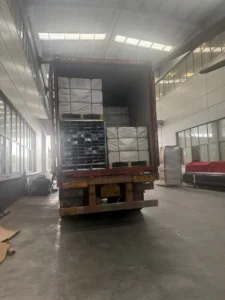
BRF Logistics arranged container trucking to support the shipment from the factory to Qingdao Port.
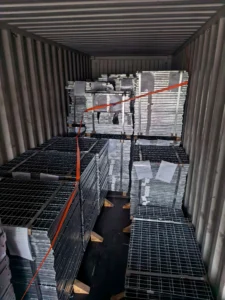
The factory was responsible for loading the steel angles into the container and completing the necessary securing and lashing operations.
This division of responsibilities allowed the factory to manage the physical loading process while BRF Logistics handled the transportation arrangements.
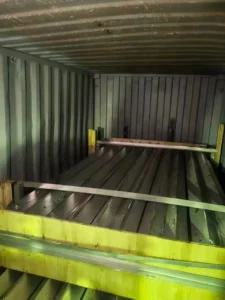
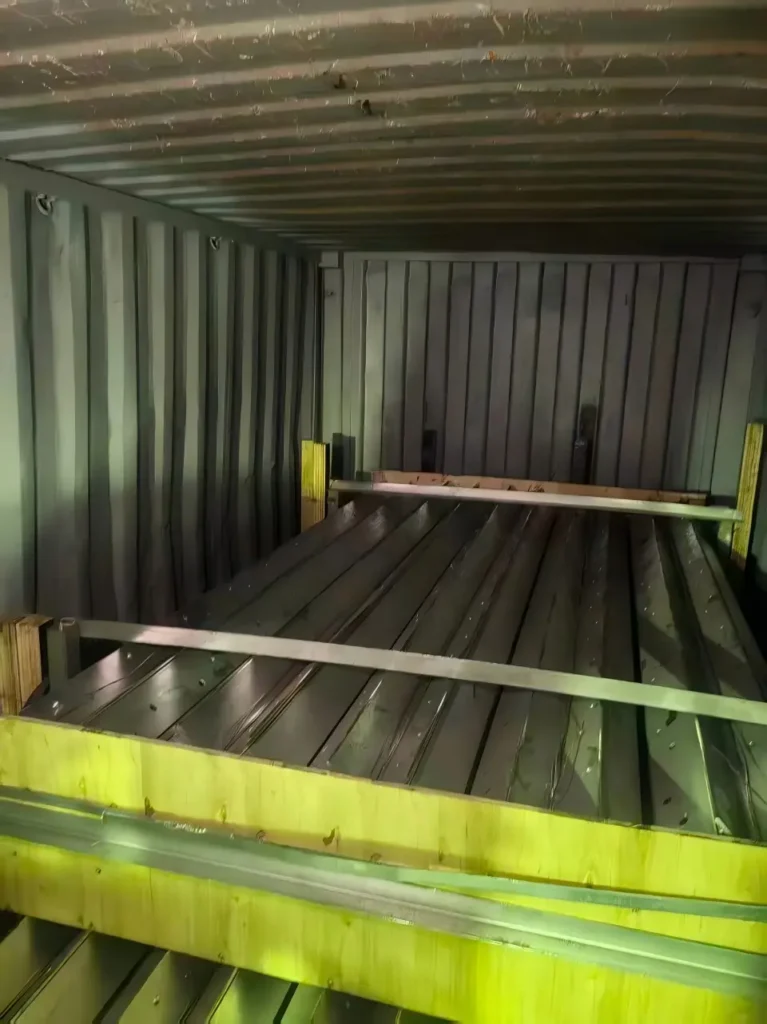
Step 3: Container Loading and Cargo Securing
Due to the concentrated weight of the steel cargo, the factory needed to ensure that the goods were positioned and secured appropriately.
Important loading considerations included:
- Container floor loading capacity and weight distribution
- Suitable cargo positioning within the container
- Appropriate blocking, bracing, and lashing arrangements
- Prevention of longitudinal and lateral cargo movement
- Compliance with applicable container and shipping line requirements
The actual loading and securing operations were performed by the factory.
Step 4: Third-Party Cargo Inspection Report
The most important challenge in this shipment was obtaining the inspection report required by the ocean carrier.
After receiving the shipping line’s requirement, BRF Logistics contacted a qualified third-party inspection organization with relevant customs-related qualifications.
We coordinated the inspection arrangements and the preparation of the required report for the shipment.
This service helped the factory address an additional shipping requirement without having to independently source and coordinate an inspection provider.
Inspection scope, report format, and acceptance remain subject to the shipping line’s specific requirements.
Step 5: Shipment Coordination
Following the loading, securing, and inspection arrangements, BRF Logistics coordinated the relevant shipping documentation and shipment process for export from Qingdao to Sydney.
Our role was to ensure that the factory, trucking provider, inspection agency, and ocean carrier had the information needed to proceed with the shipment.
4. Why Heavy Steel Cargo May Require an Inspection Report
Shipping lines may impose additional inspection or securing documentation requirements for certain heavy or concentrated-weight cargo.
Examples of industrial cargo that may require special loading attention include:
- Steel angles and steel sections
- Steel beams and channels
- Heavy steel plates
- Machinery and industrial equipment
- Steel coils and other concentrated-weight products
- Structural steel components
An inspection report may help document whether the cargo loading and securing arrangements meet the applicable requirements.
However, the need for an inspection, the accepted inspection agency, and the specific type of report depend on the shipping line, cargo characteristics, and relevant regulations.
An inspection report does not replace proper cargo securing or guarantee shipping line acceptance.
For heavy industrial shipments, we recommend confirming the shipping line’s requirements before container loading begins.
5. Understanding CIF Shipping Terms
Under CIF (Cost, Insurance and Freight) Incoterms, the seller is generally responsible for arranging and paying for ocean freight and the required level of cargo insurance to the named destination port.
However, the risk of cargo loss or damage generally transfers to the buyer when the goods are loaded on board the vessel at the port of shipment.
For this shipment, BRF Logistics supported the factory with ocean freight booking, inland trucking, and third-party inspection coordination.
Destination import customs clearance and inland delivery in Australia were not part of the stated service scope.
6. What Makes This Shipment a Useful Case Study?
This shipment demonstrates that successful heavy steel cargo transportation involves more than booking a container.
Key logistics considerations included:
- Coordinating ocean freight from Qingdao to Sydney.
- Arranging inland container trucking.
- Supporting the factory’s loading and cargo securing process through communication.
- Identifying the shipping line’s inspection documentation requirements.
- Coordinating a qualified third-party inspection agency.
By providing integrated coordination services, BRF Logistics helped the customer manage the shipping process and the additional inspection documentation requirement.
7. BRF Logistics – Steel Cargo Shipping from China to Australia
BRF Logistics provides international freight forwarding services for a wide range of industrial and construction materials shipped from China to Australia.
Our services can include ocean freight booking, domestic trucking, export documentation coordination, cargo inspection arrangements, and destination logistics services according to each customer’s requirements.
Whether you are shipping steel angles, structural steel, metal products, heavy machinery, or construction materials, our team can help evaluate the transportation requirements and coordinate a practical logistics solution.
Request a Quote for Steel Cargo Shipping
Planning to ship heavy steel products from Qingdao, Shanghai, Tianjin, or another Chinese port to Sydney, Melbourne, Brisbane, or Fremantle?
Contact BRF Logistics with your cargo description, total weight, dimensions, loading location, destination port, and required shipping terms.
If your shipping line requires a cargo inspection or container securing report, please inform us before loading so that we can help coordinate the necessary inspection arrangements.
Contact BRF Logistics: https://brf-logistics.com/