An Australia Packing Declaration Form provides important information about the packaging materials and container conditions associated with goods imported into Australia. It is commonly required for containerized cargo and helps the Australian Department of Agriculture, Fisheries and Forestry assess biosecurity risks before releasing a shipment.
For Chinese exporters, suppliers and Australian importers, an incomplete or incorrectly prepared packing declaration can lead to document queries, inspections, treatment requirements, storage charges and delayed delivery.
This guide explains who should issue the document, how to choose the correct FCL or LCL form, how to complete each section and which mistakes importers should avoid.
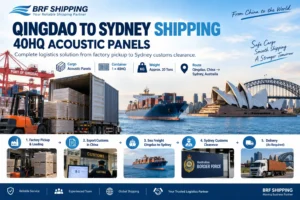
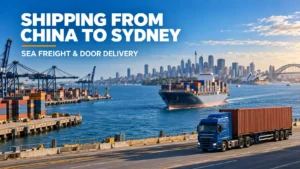
BRF SHIPPING can coordinate document preparation as part of our shipping services from China to Australia, including supplier pickup, warehousing, export customs declaration, FCL and LCL booking, Australian customs support and final delivery.
What Is an Australia Packing Declaration?
An Australian packing declaration is a biosecurity document used to describe:
- The entity responsible for packing the shipment
- The packaging and dunnage materials used
- Whether unacceptable packaging materials were used
- Whether timber or bamboo packaging was used
- How timber packaging was treated
- The cleanliness of an FCL/X shipping container
- The shipment or container covered by the declaration
The document helps Australian biosecurity officers identify non-commodity risks associated with imported cargo.
These risks may come from soil, insects, seeds, plant material, animal material, straw, untreated timber, contaminated containers or other packaging materials capable of introducing pests and diseases into Australia.
A packing declaration does not replace the commercial packing list. The commercial packing list describes the products, cartons, dimensions, weights and quantities. The Australia Packing Declaration explains the materials and conditions used when packing the shipment.
Who Should Complete the Packing Declaration?
The packing declaration must be issued by an entity that packed the goods or directly observed the packing process.
Depending on the shipment, this may be:
- The Chinese manufacturer
- The exporter
- The product supplier
- The warehouse that packed the goods
- The entity that loaded the FCL container
- The consolidator that packed the LCL consignment
The company issuing the declaration must have actual knowledge of the packaging materials used.
An Australian importer, customs broker or freight forwarder should not issue the declaration unless that entity actually packed the cargo or observed it being packed.
BRF SHIPPING can send the appropriate form to the supplier, explain the required fields and check the completed declaration for obvious inconsistencies. However, the factory, exporter or packing entity must confirm the information and sign the declaration.
Which Australia Packing Declaration Form Should You Use?
The Australian Department of Agriculture, Fisheries and Forestry provides different templates for FCL and LCL shipments.
Official templates are available from the DAFF Acceptable Documentation Templates page.
FCL/X Packing Declaration
Use an FCL/X packing declaration for a consignment-specific full-container shipment.
This may include:
- 20GP containers
- 40GP containers
- 40HQ containers
- Open-top containers
- Side-opening containers
- Other qualifying containerized shipments
An FCL/X declaration normally covers packaging materials, timber or bamboo and container cleanliness.
FCL Annual Packing Declaration
An annual FCL packing declaration may cover multiple eligible shipments packed by the same entity under consistent packing procedures.
An annual declaration is generally valid for 12 months from its issue date, provided it continues to meet the applicable requirements.
Annual declarations should not be used simply because a supplier ships frequently. The packing arrangements and issuing entity must satisfy the relevant conditions.
LCL Packing Declaration
Use an LCL packing declaration for a specific less-than-container-load shipment.
The supplier or packer declares the packaging materials used for its individual consignment. Because an LCL supplier normally does not control the cleanliness of the complete consolidated container, the LCL form should not include a container-cleanliness statement.
LCL Annual Packing Declaration
An annual LCL declaration can cover eligible LCL shipments packed by the same issuing entity during its period of validity.
The declaration must still accurately reflect the supplier’s packaging arrangements.
Is the Official DAFF Template Mandatory?
Using the official template is not mandatory.
However, an alternative company document must contain the required information and comply with Australia’s current minimum documentary and non-commodity information requirements.
Using the latest official form is recommended because it:
- Contains the expected declaration wording
- Separates FCL and LCL requirements
- Reduces missing information
- Helps avoid outdated terminology
- Makes assessment easier for customs brokers and biosecurity officers
Exporters should avoid downloading old templates from unrelated websites because the wording may no longer match current Australian requirements.
How to Complete an Australia Packing Declaration Form
1. Use the Packing Company’s Letterhead
The declaration should be issued on the letterhead of the factory, supplier, exporter, warehouse or packing entity.
The letterhead should clearly show:
- Full company name
- Physical business address
- Country
- Contact information where appropriate
The company name and physical address should be easily identifiable. A company stamp or seal may be accepted as a substitute in certain circumstances if it contains the issuing company’s name and physical address and meets the applicable documentary requirements.
Do not use BRF SHIPPING’s letterhead when the supplier or factory packed the cargo. The declaration must identify the actual packing entity.
2. Enter the Date of Issue
The declaration should contain a complete issue date showing:
- Day
- Month
- Year
Use a clear format such as:
14 September 2026
Avoid an ambiguous numerical date such as 09/10/2026, which could be interpreted as either 9 October or 10 September.
A consignment-specific declaration should normally be issued after the goods or container have been packed. This allows the signer to verify the actual packaging materials and container condition.
3. Link the Declaration to the Shipment
The packing declaration must be clearly linked to the shipment it covers.
Depending on the template and available information, the link may include:
- Container number
- Bill of lading number
- Booking number
- Commercial invoice number
- Consignment reference
- Vessel and voyage details
For an FCL shipment, the container number is usually the clearest reference.
Example:
Container Number: ABCD1234567
The same reference should appear consistently on related commercial and shipping documents.
If a declaration contains more than one page, an acceptable consignment-specific link should appear on every page. Page numbers alone may not be sufficient to connect each page to the shipment.
4. Answer the Unacceptable Packaging Material Question
The form asks whether unacceptable packaging materials have been used as packaging or dunnage.
Examples can include:
- Straw
- Hay
- Chaff
- Peat
- Rice hulls
- Soil bags
- Used fruit and vegetable cartons
- Used egg cartons
- Used meat cartons
- Used sacks or bags
- Agricultural-waste packaging materials
The packer should select “No” only after confirming that none of these materials were used.
Plastic wrapping, synthetic foam, metal frames and other clean commercial packing materials may be used where they comply with the applicable import conditions.
Older forms may use the expression “prohibited packaging materials.” Current documentation should follow the DAFF terminology referring to unacceptable packaging materials.
5. Declare Timber or Bamboo Packaging
The supplier must state whether timber or bamboo packaging or dunnage was used.
Timber packaging can include:
- Solid-wood pallets
- Timber crates
- Wooden cases
- Timber skids
- Timber blocks
- Bracing timber
- Wooden dunnage
The form should distinguish between:
- Timber packaging
- Bamboo packaging
- No timber or bamboo packaging
Packaging manufactured entirely from plywood, veneer, reconstituted wood or bamboo laminate may be treated differently from solid timber. Confirm the exact material before completing the declaration.
Do not describe a solid-wood pallet as plywood simply to avoid treatment requirements. The declaration must accurately describe the actual packaging.
Does Timber Packaging Need ISPM 15 Treatment?
Solid timber packaging used for shipments to Australia commonly needs to meet applicable biosecurity treatment requirements.
If the timber has been treated and marked under ISPM 15, the declaration should indicate:
All timber packaging or dunnage used in the consignment has been treated and marked in compliance with ISPM 15.
The physical timber packaging should carry a valid and legible ISPM 15 mark.
If the packaging was treated under another accepted DAFF treatment requirement, an appropriate treatment certificate may be required.
Important distinctions include:
- ISPM 15 applies to qualifying timber packaging
- An ISPM 15 statement is not suitable evidence for bamboo packaging
- Declaring treated timber without supporting evidence can cause delays
- Treatment documents must match the packaging, shipment and issuing provider
- Timber should be free from bark and visible contamination
If both ISPM 15-compliant timber and timber treated under separate DAFF requirements were used, the declaration must clearly explain the situation. Do not select two conflicting options while leaving the word “OR” between them.
Importers should check the current commodity and packaging requirements through the official BICON system before loading.
How to Complete the Container Cleanliness Statement
An FCL/X declaration normally includes a container-cleanliness statement.
The packing entity should confirm that the container:
- Was cleaned before loading
- Was free from soil
- Was free from seeds and grain
- Was free from insects and snails
- Was free from plant material
- Was free from animal material
- Did not contain contamination from previous cargo
The container should be checked internally and externally where possible, including:
- Container floor
- Lower side rails
- Walls and ceiling
- Door seals
- Corners
- Undercarriage
- External surfaces
Contaminated containers entering Australia may be directed for inspection, cleaning or treatment.
Important Rule for LCL Cargo
An LCL packing declaration should not include a container-cleanliness statement.
The individual LCL supplier normally does not pack or control the entire consolidated container. DAFF therefore provides a separate LCL template without this statement.
Adding container-cleanliness wording to an LCL declaration can create unnecessary questions because the supplier may be certifying something it did not observe.
Who Must Sign the Packing Declaration?
An employee of the issuing company must endorse the declaration.
The completed form should include:
- Printed name of the employee
- Employee’s signature
- Date of issue
- Company identification
A company title or employee position is not mandatory specifically for a packing declaration, but the signer must be identifiable.
The form should not be signed by:
- An unrelated trading company
- The Australian buyer
- A freight forwarder that did not observe packing
- A customs broker that did not observe packing
- A person who cannot verify the answers
Blank forms signed in advance should never be used.
Australia Packing Declaration Example
The following example shows how the declaration might be completed for metal fence panels loaded in a 40HQ container using verified ISPM 15-treated solid-wood pallets.
Shipment Information
Issuing Company: Qingdao Example Manufacturing Co., Ltd.
Physical Address: Full factory address, Qingdao, China
Container Number: ABCD1234567
Date of Issue: 14 September 2026
Cargo: Aluminum fence panels and gates
Packaging Declaration
Have unacceptable packaging materials been used?
No
Has timber or bamboo packaging been used?
Yes — Timber
How was the timber packaging treated?
Treated and marked in compliance with ISPM 15
Was the container cleaned and free from animal material, plant material and soil?
Yes
Employee Name:
Full printed name of the responsible employee
Signature:
Signature of the employee of the packing company
This example must not be copied without checking the actual shipment. If the cargo was packed without timber, contained bamboo, used untreated timber or was shipped as LCL, the answers would be different.
Common Australia Packing Declaration Mistakes
Incorrect Issuing Company
The declaration is issued by a freight forwarder or importer that did not pack or observe the cargo.
Correction: Ask the factory, supplier, exporter, packer or consolidator responsible for packing to issue and sign the form.
Missing Physical Address
The form shows only a logo or company name.
Correction: Add the issuing company’s complete physical business address.
No Shipment Reference
The declaration does not show a container number, bill of lading number or another acceptable consignment link.
Correction: Add a consistent numerical reference connecting the form to the shipment.
LCL Form Includes Container Cleanliness
The LCL supplier certifies the cleanliness of a container it did not control.
Correction: Use the current DAFF LCL template and remove the container-cleanliness statement.
Timber Is Declared Without Treatment Evidence
The form says solid timber pallets were used but does not identify treatment or provide acceptable supporting evidence.
Correction: Confirm ISPM 15 marking or provide the required treatment documentation.
Conflicting Answers
The declaration says no timber was used, while packing photographs or the packing list show wooden pallets.
Correction: Verify the actual materials and issue a corrected declaration.
Missing Signature or Printed Name
The company stamp is present, but no identifiable employee endorsed the document.
Correction: Add the printed name and signature of an employee of the issuing company.
Using an Outdated Form
The declaration uses old terminology or combines statements that should be separated.
Correction: Download the latest FCL or LCL template from the official DAFF website.
Altering the Form Without Endorsement
Information is manually changed after the document has been signed.
Correction: Have an employee of the original issuing company properly endorse the amendment or issue a new corrected document.
What Happens If the Packing Declaration Is Missing?
A missing or unacceptable packing declaration can prevent the shipment from receiving documentary clearance for non-commodity biosecurity concerns.
Possible consequences include:
- Additional document requests
- Container inspection
- Rural tailgate inspection
- Cleaning requirements
- Fumigation or treatment
- Transport to an Approved Arrangement site
- Port storage charges
- Container detention
- Customs-clearance delays
- Delayed final delivery
The exact action depends on the cargo, packaging, container type, origin, delivery postcode and applicable BICON conditions.
Importers should prepare the declaration before the vessel arrives in Australia. Ideally, the completed document should be reviewed before the cargo leaves China so errors can be corrected while the supplier is still available.
For a broader explanation of arrival procedures, read our Australia customs clearance and door-to-door delivery guide.
Australia Packing Declaration Checklist
Before submitting the form, confirm that:
- The correct FCL/X or LCL template was used
- The declaration was issued by the actual packing entity
- The company name is clearly shown
- The physical business address is included
- The issue date contains the day, month and year
- The container or consignment reference is correct
- Unacceptable packaging materials are accurately declared
- Timber and bamboo packaging are correctly identified
- ISPM 15 or other treatment evidence is available when required
- The container-cleanliness statement is completed for FCL/X
- The container-cleanliness statement is removed for LCL
- The employee’s printed name is shown
- The form is signed
- Information matches the packing list and shipment documents
- Every page is linked to the same consignment
- The Australian customs broker receives the document before arrival
BRF SHIPPING Document Support for Australia Shipments
BRF SHIPPING provides coordinated logistics services for commercial cargo moving from China to Australia.
Our service can include:
- Supplier and factory pickup
- China warehouse receiving
- Multi-supplier consolidation
- Packing document coordination
- FCL container loading
- LCL consolidation
- China export customs declaration
- Sea freight and air freight booking
- Australian customs and biosecurity coordination
- Port collection
- Container or loose-cargo delivery
- Delivery to warehouses and project sites
We regularly handle building materials, aluminum fences, metal gates, scaffolding, machinery, furniture, outdoor products and other commercial cargo shipped to Sydney, Melbourne, Brisbane, Fremantle, Perth and Adelaide.
The factory or packer remains responsible for the accuracy of its packing declaration. Our team can help identify missing fields and coordinate corrections before the document is sent to the Australian customs broker.
Frequently Asked Questions
Is the Australia Packing Declaration the same as a packing list?
No. A commercial packing list describes the products, packages, quantities, dimensions and weights. An Australia Packing Declaration provides biosecurity-related information about packaging materials and container cleanliness.
Is an Australia Packing Declaration required for every shipment?
Requirements vary by cargo and shipment type. Containerized FCL/X and LCL shipments commonly require relevant packaging information, while other cargo types may be exempt or assessed differently. Check the applicable DAFF and BICON requirements.
Can the Chinese supplier sign the form?
Yes, if the supplier packed the goods or observed the packing and can verify the information provided.
Can BRF SHIPPING issue the declaration?
BRF SHIPPING may issue the declaration only when our warehouse or team actually packed or observed the packing covered by the document. When the factory packed the goods, the factory or responsible supplier should issue it.
Does LCL cargo require a container-cleanliness declaration?
The LCL packing declaration should not include a container-cleanliness statement because the individual supplier normally does not control the complete consolidated container.
How long is an annual packing declaration valid?
An eligible annual packing declaration is generally valid for 12 months from its issue date, provided it continues to meet the applicable requirements.
Do plywood pallets need ISPM 15 treatment?
Packaging manufactured entirely from plywood, veneer or reconstituted wood may be treated differently from solid timber. Confirm the construction material and current BICON conditions before completing the timber declaration.
Is a Certificate of Origin part of the packing declaration?
No. A Certificate of Origin is a separate trade document used to establish the origin of goods and may support a preferential tariff claim. It does not replace the packing declaration.
Get Help Shipping from China to Australia
A correctly completed Australia Packing Declaration can reduce document queries and help the customs and biosecurity process move more smoothly.
Send BRF SHIPPING the following information before shipment:
- Chinese supplier address
- Cargo description
- Packaging materials
- Number of packages
- Dimensions and gross weight
- Total CBM
- Container type
- Australian port or delivery postcode
- Cargo-ready date
- Available treatment documents
We will help coordinate a practical FCL, LCL, air freight or door-to-door shipping solution from China to Australia.
Contact BRF SHIPPING for an Australia freight quotation.
This article provides general document-preparation and shipping information. Import and biosecurity requirements are shipment-specific and can change. Confirm current requirements with DAFF, BICON and the appointed Australian customs or biosecurity professional before loading.