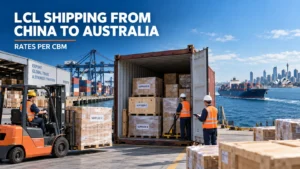
Decoding HS Codes for LCL Shipments: A Complete Step-by-Step Guide for Importers
In international shipping, especially LCL (Less than Container Load) shipments, accurate product classification is critical. One of the most important elements in this process is the HS Code (Harmonized System Code).
Incorrect HS codes can lead to customs delays, unexpected duties, penalties, or even cargo seizure—which is particularly risky in LCL shipping where multiple shipments share one container.
This guide will help you fully understand how HS codes work and how to classify your goods correctly for smooth global shipping.
What is an HS Code?
An HS Code is an internationally standardized numerical system used to classify traded goods, developed by the World Customs Organization (WCO).
HS Code Structure:
- First 2 digits (Chapter): Product category
- Next 2 digits (Heading): Product group
- Next 2 digits (Subheading): Specific product
- Additional digits: Country-specific classification
???? Example:
- 09 = Coffee/Tea category
- 0902 = Tea
- 0902.10 = Green tea
Why HS Codes Are Critical for LCL Shipping
Unlike FCL (Full Container Load), LCL shipments share container space with other cargo. This makes HS code accuracy even more important.
Key Reasons:
1. Smooth Customs Clearance
HS codes determine:
- Import duties
- Taxes
- Regulatory requirements
Incorrect classification can trigger inspections or delays.
2. Avoid Delays for Entire Container
In LCL shipments, one incorrect declaration can delay all shipments in the same container.
3. Compliance with Global Trade Regulations
HS codes identify:
- Restricted goods
- Quotas
- Licensing requirements
4. Accurate Freight & Cost Calculation
Duties, tariffs, and even some logistics fees depend on correct classification.
Step-by-Step Guide to Finding the Correct HS Code
Step 1: Understand Product Details
Before classification, gather:
- Product name
- Material/composition
- Function/use
- Form (liquid, solid, finished product, etc.)
- Manufacturing process
???? Accurate information is the foundation of correct HS coding.
Step 2: Use Official HS Databases
Search using:
- National customs tariff systems (e.g., HTSUS, EU TARIC)
- WCO HS database
Start broad, then narrow down based on product specifics.
Step 3: Apply the General Rules of Interpretation (GRI)
The GRI rules guide HS classification:
- GRI 1: Based on product description
- GRI 2: Covers incomplete or mixed goods
- GRI 3: Used when multiple classifications apply
These rules ensure consistent classification worldwide.
Step 4: Compare Similar Products Carefully
Avoid:
❌ Assuming similar products share the same HS code
❌ Copying supplier or competitor codes blindly
Even small differences in material or usage can change classification.
Step 5: Consult a Customs Broker or Freight Forwarder
For complex or high-value shipments:
- Work with licensed customs brokers
- Use experienced freight forwarders like BRF SHIPPING
This helps reduce compliance risks and costly errors.
Step 6: Document Your HS Code Decision
Always keep records of:
- Product description
- Selected HS code
- Reasoning for classification
This creates an audit trail for customs authorities.
Common Mistakes to Avoid in LCL HS Classification
❌ Misclassification to Reduce Duties
Trying to use a lower-duty HS code can result in:
- Heavy fines
- Shipment delays
- Increased inspections
❌ Ignoring HS Code Updates
HS codes are updated every 5–6 years, and some regions now require more detailed codes (e.g., 10–12 digits).
❌ Relying Only on Product Name
Classification depends on material and function, not just name.
HS Codes and the LCL Shipping Process
In LCL logistics, HS codes play a role in:
- Booking & documentation
- Consolidation (grouping cargo)
- Customs clearance
- Deconsolidation at destination
Incorrect HS codes can cause:
- Customs holds
- Additional inspection fees
- Delivery delays
Because LCL shipments involve shared containers, errors can impact multiple shipments simultaneously.
Best Practices for Importers & Exporters
✔ Verify HS codes before shipping
✔ Stay updated with 2025 HS changes
✔ Use consistent classification across shipments
✔ Work with reliable logistics partners
✔ Prepare complete documentation (Invoice, Packing List, HS Code)
Why Choose BRF SHIPPING for HS Code & LCL Shipping?
With extensive experience in global freight forwarding, BRF Logistics provides:
- Professional HS code guidance
- LCL consolidation services
- Customs clearance support
- Door-to-door logistics solutions (DDP/DDU)
- Shipping from China to USA, Australia, Middle East
???? This ensures faster clearance, lower risk, and smoother delivery.
Final Thoughts
Understanding and correctly applying HS codes is essential for successful LCL shipping. It’s not just a compliance requirement—it directly impacts:
- Shipping costs
- Transit time
- Supply chain reliability
By following a structured approach and working with experienced partners, you can avoid costly mistakes and ensure seamless international trade.