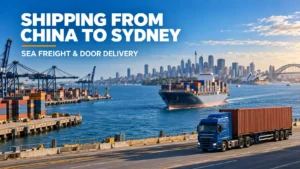
The 40ft container shipping cost from China to Australia depends on the Chinese loading location, destination port, container type, cargo weight, shipping line, sailing schedule and final delivery address.
Importers can choose between a standard 40GP container and a taller 40HQ container. Both provide substantially more loading space than a 20GP, making them suitable for furniture, building materials, aluminium fencing, machinery, equipment, consumer products and other high-volume commercial cargo.
As an indicative September 2026 market reference, basic port-to-port ocean freight for a 40GP container on common China–Australia routes may be approximately USD 4,275–5,225. A 40HQ may be quoted at a similar or slightly different rate depending on the shipping line, equipment availability and route.
This figure is only an ocean-freight planning reference. It does not represent the complete cost of shipping a 40ft container from a Chinese factory to an Australian delivery address.
The total shipment cost may also include:
- Factory pickup in China
- Container loading
- China export customs clearance
- Origin terminal charges
- Ocean freight
- Australian destination charges
- Customs broker fees
- Import Processing Charges
- Biosecurity charges
- Customs duty and GST
- Port storage or inspections
- Container delivery
- Empty-container return
BRF Shipping can arrange the complete movement from supplier pickup in China through to customs coordination and container delivery in Australia.
For a comparison of sea freight, air freight and door delivery, visit our Shipping Cost from China to Australia guide.
How Much Does a 40ft Container from China to Australia Cost?
A published ocean-freight rate is usually only one part of the total cost.
| Cost category | What it may include |
|---|---|
| China factory pickup | Empty-container positioning, trucking, tolls and waiting time |
| Origin charges | Terminal handling, documentation, seal and booking-related charges |
| Export customs clearance | China export declaration and customs documentation |
| Ocean freight | Port-to-port transportation by the shipping line |
| Australian destination charges | Carrier, terminal, port and documentation charges |
| Customs clearance | Import declaration and customs broker services |
| Biosecurity processing | Declaration charges, assessment, inspection or treatment |
| Import taxes | Customs duty, GST and other applicable taxes |
| Final delivery | Container transport from the port to the delivery address |
| Empty return | Returning the unloaded container to the nominated depot |
A port-to-port offer may look inexpensive because it excludes many destination costs. Importers should compare quotations based on the same service scope.
The most useful comparison is normally the total cost under one of the following arrangements:
- Port-to-port
- FOB port-to-door
- EXW door-to-port
- EXW door-to-door
- DAP delivery
- DDP delivery, where available and agreed in advance
Every quotation should clearly identify which charges, duties and taxes are included or excluded.
September 2026 40ft Container Freight Reference
The following table can be used for preliminary planning.
| Shipping option | Indicative planning reference |
|---|---|
| 40GP basic port-to-port ocean freight | Approximately USD 4,275–5,225 |
| 40HQ basic port-to-port ocean freight | Live quotation required |
| China factory pickup | Based on factory address and loading method |
| China export handling | Based on origin port and customs arrangement |
| Australian local charges | Based on shipping line and arrival port |
| Customs and biosecurity | Based on cargo type and declaration requirements |
| Duty and GST | Based on customs classification, value and origin |
| Australian delivery | Based on port, postcode, weight and unloading conditions |
These figures are not fixed BRF Shipping rates. Container freight prices can change due to:
- Carrier capacity
- Peak-season demand
- Chinese holidays
- Equipment availability
- Blank sailings
- Port congestion
- Fuel surcharges
- Security surcharges
- Weather disruption
- Commodity restrictions
- Container weight
- Route and transshipment arrangements
For an actual shipment, request a live rate with a clearly stated validity period.
What Is the Difference Between 40GP and 40HQ?
A 40GP is a standard-height 40-foot dry container. A 40HQ—also called a 40HC or 40-foot high-cube container—has approximately 30 cm of additional internal height.
| Specification | 40GP | 40HQ |
|---|---|---|
| External length | About 12.19 m | About 12.19 m |
| External width | About 2.44 m | About 2.44 m |
| External height | About 2.59 m | About 2.90 m |
| Internal length | About 12.03 m | About 12.03 m |
| Internal width | About 2.35 m | About 2.35 m |
| Internal height | About 2.39 m | About 2.69 m |
| Nominal capacity | About 67 CBM | About 76 CBM |
| Typical practical loading volume | Approximately 54–58 CBM | Approximately 60–68 CBM |
Actual internal dimensions vary slightly by container manufacturer and equipment fleet.
Practical loading capacity is lower than nominal capacity because cartons, pallets, crates and irregularly shaped products create unused spaces.
When to Choose a 40GP
A 40GP may be suitable when:
- The cargo is not especially tall
- Volume is more important than height
- The shipment contains standard pallets or cartons
- The goods are moderately dense
- A standard 40ft container is readily available
- The cargo can be loaded safely within the permitted weight
When to Choose a 40HQ
A 40HQ is often preferred when:
- Products are bulky but relatively lightweight
- More vertical space is required
- The cargo includes furniture or home products
- The shipment contains aluminium fencing or long profiles
- Cartons can be stacked efficiently
- The importer wants a lower shipping cost per cubic metre
- The cargo would not fit into a standard-height 40GP
For many manufactured goods, a 40HQ provides more usable space without a proportionate increase in ocean freight. However, it is not automatically suitable for heavy cargo.
Is a 40HQ Always Better Than a 40GP?
No. A 40HQ offers more volume, but it does not necessarily provide a higher cargo-weight allowance.
The maximum cargo weight depends on:
- Container tare weight
- Maximum gross weight shown on the CSC plate
- Shipping-line restrictions
- Verified Gross Mass
- Port handling restrictions
- Australian road weight limits
- Axle configuration
- Delivery equipment
- Local permit requirements
Dense products may reach the safe or legal weight limit before a 40HQ is full. This commonly affects:
- Steel products
- Stone
- Tiles
- Scaffolding
- Metal components
- Machinery
- Construction materials
- Industrial raw materials
For heavy cargo, a 20GP may sometimes be more practical than a 40GP or 40HQ because it is easier to control weight distribution and inland transport.
See our dedicated guide to 20ft Container Shipping Cost from China to Australia for a detailed comparison.
Complete 40ft Container Shipping Cost Breakdown
The complete cost can be expressed as:
China pickup + origin handling + export clearance + ocean freight + Australian destination charges + customs and biosecurity costs + taxes + final delivery
1. Factory Pickup in China
Under EXW shipping terms, the freight forwarder collects the goods from the supplier’s factory.
The cost depends on:
- Factory location
- Loading port
- Distance and tolls
- Cargo weight
- Container type
- Live loading or warehouse loading
- Loading time
- Truck waiting time
- Overnight or weekend service
- Special permits for oversized cargo
A 40ft container requires more space to manoeuvre than a smaller truck. Before arranging factory loading, confirm that the supplier’s premises can accommodate the container truck.
BRF Shipping can arrange pickup services in China from factories in Shandong, Guangdong, Zhejiang, Jiangsu, Hebei and other manufacturing regions.
2. Warehouse Consolidation and Loading
When goods come from multiple suppliers, the products can be collected at a BRF Shipping warehouse before loading.
Warehouse services may include:
- Receiving cargo from different suppliers
- Checking package quantities
- Measuring cartons and pallets
- Temporary storage
- Repacking
- Palletisation
- Labelling
- Loading-plan preparation
- Container loading
- Cargo securing
- Loading photographs
- Container seal records
A loading plan is particularly important for 40GP and 40HQ containers. Poor planning can leave significant unused space or create an unsafe distribution of weight.
Learn more about China warehouse and storage services.
3. China Export Customs Clearance
Before the container is loaded onto the vessel, an export customs declaration must be completed in China.
The documents commonly include:
- Commercial invoice
- Packing list
- Sales contract, when required
- Exporter information
- Consignee information
- HS codes
- Product descriptions
- Declared values
- Package quantities
- Gross and net weights
- Country-of-origin information
- Dangerous-goods documents, when applicable
Information on the customs declaration should be consistent with the bill of lading, commercial invoice and Australian import documents.
BRF Shipping can coordinate China export customs clearance when the supplier cannot export directly or when cargo from several suppliers is combined.
4. Origin Port Charges
Origin charges may include:
- Terminal handling
- Documentation
- Container seal
- Port security charges
- Equipment management
- Customs declaration
- Verified Gross Mass submission
- Bill of lading fees
- Telex release
- Container loading or lifting
- Late-gate or amendment charges
Always confirm whether these charges are included in the freight quotation.
5. Ocean Freight
Ocean freight covers the international transport of the 40GP or 40HQ container between the selected Chinese and Australian ports.
The rate depends on:
- Chinese departure port
- Australian arrival port
- Shipping line
- Direct or transshipment service
- Container type
- Cargo weight
- Commodity
- Sailing date
- Space availability
- Rate validity
- Contract or spot-market pricing
A cheaper transshipment service may take longer and create additional schedule risk. A direct sailing may offer better transit reliability but can have a higher rate.
6. Australian Destination Charges
After the vessel arrives, the container may generate charges from the shipping line, terminal, port, customs broker and transport company.
These may include:
- Delivery order
- Carrier documentation
- Terminal handling
- Port service fees
- Infrastructure charges
- Customs broker fees
- Import declaration
- Biosecurity cost-recovery charges
- Container lift charges
- Inspection positioning
- Wharf storage
- Container detention
Destination charges vary by shipping line and port. They should be checked before the booking is confirmed—not after the container arrives.
7. Australian Import Processing and Biosecurity Charges
The Australian Border Force applies Import Processing Charges when an import declaration is made.
At the time of publication, the official electronic Import Processing Charges listed by the Australian Border Force include:
| Customs value | Electronic declaration charge |
|---|---|
| AUD 1,000 or less | AUD 0 |
| More than AUD 1,000 but less than AUD 10,000 | AUD 50 |
| AUD 10,000 or more | AUD 152 |
For sea freight consignments above AUD 1,000, a separate biosecurity cost-recovery charge may also apply. These government charges can change, so importers should verify the current amounts on the Australian Border Force Import Processing Charges page.
Customs broker service fees, inspections, treatments and storage are separate from these government declaration charges.
8. Customs Duty and GST
Australian customs duty depends on:
- HS code
- Product description
- Customs value
- Country of origin
- Applicable tariff rate
- Trade-agreement eligibility
- Supporting documentation
Some products of Chinese origin may qualify for preferential duty treatment under the China–Australia Free Trade Agreement. Preferential treatment is not automatic. The goods must meet the relevant rules of origin, and valid origin documentation may be required.
Import GST is generally 10% of the value of the taxable importation.
The GST calculation generally includes:
- Customs value
- Customs duty
- International freight
- International insurance
- Wine Equalisation Tax, where applicable
The official calculation is explained by the Australian Taxation Office.
GST Calculation Example
Assume a 40HQ shipment has:
- Customs value: AUD 50,000
- Customs duty: AUD 2,500
- International freight and insurance: AUD 6,000
The estimated taxable value would be:
AUD 50,000 + AUD 2,500 + AUD 6,000 = AUD 58,500
Estimated GST:
AUD 58,500 × 10% = AUD 5,850
The total estimated duty and GST would therefore be:
AUD 2,500 + AUD 5,850 = AUD 8,350
This is a simplified example. Actual calculations depend on the customs classification, valuation, origin and applicable Australian regulations.
9. Container Delivery in Australia
Australian container delivery costs depend on more than the distance between the port and the consignee.
The transport provider needs to know:
- Arrival port
- Delivery postcode
- Container type
- Total cargo weight
- Site opening hours
- Road access
- Vehicle restrictions
- Unloading method
- Whether the container remains on the trailer
- Required unloading time
- Empty-container return depot
Standard Trailer Delivery
With standard trailer delivery, the container normally remains on the truck while the consignee unloads it.
This requires:
- Suitable site access
- A forklift or unloading team
- Sufficient unloading time
- Safe access to the container floor
- Coordination with the driver
Waiting-time charges may apply when unloading exceeds the included time.
Side-Loader Delivery
A side-loader can place the loaded container on the ground temporarily.
This option may be required when:
- Unloading takes several hours
- The consignee does not have a loading dock
- The container must be positioned at ground level
- Goods are unloaded manually
- The site has suitable level ground and access
Side-loader delivery usually costs more than standard trailer delivery and is not available at every location.
Unpack Depot Delivery
If the final site cannot accept a container truck, the container may be unpacked at a depot. The loose cargo is then delivered using a smaller vehicle.
This arrangement can add:
- Depot unpacking fees
- Pallet handling
- Storage
- Local delivery
- Tail-lift or crane service
- Additional cargo handling risk
BRF Shipping can arrange door-to-door shipping from China based on the consignee’s actual unloading conditions.
Major 40ft Container Routes from China to Australia
Common origin ports include:
- Qingdao
- Shanghai
- Ningbo
- Shenzhen and Yantian
- Guangzhou and Nansha
- Tianjin and Xingang
- Xiamen
Major Australian destinations include:
- Sydney
- Melbourne
- Brisbane
- Fremantle
- Adelaide
Shanghai to Sydney, Melbourne and Brisbane
Shanghai is a major departure port for cargo produced in Shanghai, Jiangsu, Zhejiang and surrounding manufacturing regions.
Common products include:
- Machinery
- Electrical equipment
- Furniture
- Home products
- Automotive parts
- Industrial components
Frequent services make Shanghai a practical choice for both 40GP and 40HQ shipments.
Ningbo to Australia
Ningbo is commonly used for exports from Zhejiang and nearby provinces.
Typical cargo includes:
- Furniture
- Tools
- Machinery
- Household products
- Building materials
- Plastic products
The decision between Shanghai and Ningbo should consider factory trucking, carrier schedules, port charges and space availability.
Shenzhen or Yantian to Australia
Shenzhen and Yantian serve Guangdong and the Pearl River Delta.
Common 40HQ cargo includes:
- Electronics
- Lighting
- Furniture
- Appliances
- Fitness equipment
- Consumer goods
- E-commerce inventory
A 40HQ is often suitable for this cargo because many products are relatively lightweight but occupy substantial space.
Qingdao to Australia
Qingdao is a major export gateway for Shandong and northern China.
Typical cargo includes:
- Aluminium fencing
- Metal gates
- Sound-barrier panels
- Machinery
- Tyres
- Building products
- Industrial equipment
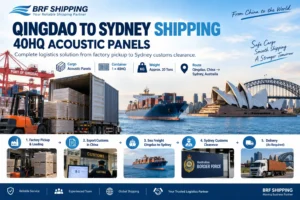
BRF Shipping has experience coordinating full-container shipments from Qingdao to Australian ports, including pickup, export clearance, booking, customs coordination and final delivery.
See our Qingdao to Sydney sound barrier shipping case for related China–Australia logistics services.
Tianjin to Australia
Tianjin and Xingang serve Beijing, Hebei and other northern manufacturing regions.
Typical products include:
- Scaffolding
- Steel products
- Machinery
- Construction materials
- Industrial components
Heavy cargo must be reviewed carefully before selecting a 40GP or 40HQ.
Our Tianjin to Sydney scaffolding shipping case explains how BRF Shipping coordinated 20GP and 40HQ containers, Australian customs processing, duty payment and door delivery.
Shipping a 40ft Container to Sydney
Sydney is one of the main gateways for cargo serving New South Wales.
The complete cost depends on:
- Chinese origin
- Shipping line
- Port-to-port rate
- Sydney terminal charges
- Customs and biosecurity processing
- Delivery postcode
- Container weight
- Empty-return location
Regional New South Wales delivery may cost substantially more than metropolitan Sydney delivery.
BRF Shipping’s Shanghai to Sydney metal fence and gate case provides an example of an end-to-end Australia shipment.
Shipping a 40ft Container to Melbourne
Melbourne is commonly used for imports destined for Victoria and southern Australian markets.
When comparing Sydney and Melbourne, calculate the complete landed logistics cost. A lower ocean rate to Sydney may not produce a lower total cost if the cargo must ultimately be delivered in Victoria.
Shipping a 40ft Container to Brisbane
Brisbane serves Queensland importers and regional distribution networks.
Container delivery costs may increase for:
- Regional Queensland locations
- Heavy containers
- Restricted-access sites
- Side-loader delivery
- Long-distance empty-container returns
Shipping a 40ft Container to Fremantle
Fremantle serves Perth and Western Australia.
Rates and transit times may differ from east-coast routes. Importers should request a route-specific quotation rather than applying a Sydney rate to a Fremantle shipment.
Shipping a 40ft Container to Adelaide
Adelaide cargo may move through a direct service, a transshipment route or another Australian gateway with domestic transport.
The best option depends on sailing schedules, carrier rates, cargo urgency and inland delivery costs.
How Long Does 40ft Container Shipping Take?
Port-to-port sea freight from China to Australia commonly takes approximately 20–27 days under normal operating conditions.
Total door-to-door lead time should also include:
| Shipping stage | Typical planning requirement |
|---|---|
| China supplier pickup | 1–5 days |
| Warehouse consolidation | 1–7 days |
| Export clearance and port handling | 2–5 days |
| Ocean transportation | Approximately 20–27 days |
| Australian customs and biosecurity | Depends on cargo and document status |
| Port release and delivery | Commonly several working days |
These are planning estimates, not guaranteed transit times.
Delays may result from:
- Supplier production delays
- Missed documentation cut-offs
- Vessel rollover
- Blank sailing
- Port congestion
- Customs questions
- Biosecurity inspection
- Treatment requirements
- Terminal storage
- Transport capacity
- Empty-container return issues
Australian Biosecurity Requirements
Australia applies strict biosecurity controls to imported goods, packaging and containers.
Products requiring particular attention may include:
- Timber
- Wooden furniture
- Wooden crates and pallets
- Bamboo products
- Food products
- Plant materials
- Animal products
- Used machinery
- Outdoor equipment
- Agricultural equipment
- Products contaminated by soil or organic matter
The exterior and interior of the container should be clean and free from:
- Soil
- Seeds
- Plant material
- Insects
- Animal residue
- Straw
- Contaminated packaging
- Standing water
Used machinery and outdoor products should be professionally cleaned before export.
Packing Declaration for 40GP and 40HQ Shipments
An Australian Packing Declaration may be required for containerised sea freight.
The declaration provides information about:
- Timber packing
- Bamboo packing
- Straw or prohibited packing materials
- Container cleanliness
- Whether the goods were packed in an acceptable location
Incorrect or incomplete declarations may result in:
- Document queries
- Biosecurity inspection
- Container examination
- Treatment
- Storage
- Detention
- Delivery delays
Use our guide on How to Complete an Australia Packing Declaration Form before the container departs China.
Suitable Cargo for a 40GP or 40HQ
A 40ft container is commonly used for:
- Aluminium fencing and gates
- Furniture
- Cabinets
- Building materials
- Home-improvement products
- Fitness equipment
- Machinery
- Auto parts
- Solar products
- Plastic products
- Consumer goods
- Textiles
- Packaging materials
- Commercial equipment
- E-commerce inventory
A 40HQ is especially useful for bulky cargo with a relatively low density.
For example, aluminium fencing panels, posts and gates may occupy a large amount of container space without reaching the maximum cargo-weight limit. A 40HQ can therefore provide better space utilisation than a 40GP.
40ft Container vs 20ft Container vs LCL
| Shipping option | Approximate practical volume | Suitable cargo |
|---|---|---|
| LCL | Usually below full-container volume | Small and medium consolidated shipments |
| 20GP | Often 25–28 CBM | Dense, heavy or medium-volume cargo |
| 40GP | Often 54–58 CBM | Larger standard-height cargo |
| 40HQ | Often 60–68 CBM | Bulky and lightweight cargo |
Choose LCL When
- Cargo volume is relatively small
- The shipment does not need a dedicated container
- The goods can be safely consolidated
- Destination LCL charges remain economical
See our LCL shipping service for smaller shipments.
Choose a 20GP When
- Cargo is dense or heavy
- Volume is approximately 15–28 CBM
- A full container is preferred
- A 40ft container would contain substantial unused space
Choose a 40GP When
- Cargo requires more floor space
- Standard container height is sufficient
- Total volume is approximately 30–58 CBM
- Weight remains within applicable limits
Choose a 40HQ When
- Cargo is bulky and relatively lightweight
- Additional internal height improves loading
- Volume may exceed the practical capacity of a 40GP
- The importer wants to reduce cost per cubic metre
For a complete explanation of FCL and LCL services, visit Sea Freight from China to Australia.
Port-to-Port vs Door-to-Door 40ft Shipping
Port-to-Port
Port-to-port shipping generally covers international transport between the departure and arrival ports.
The importer may still need to arrange:
- China factory pickup
- Export declaration
- Australian customs clearance
- Biosecurity processing
- Destination charges
- Container transport
- Empty return
This service may suit experienced importers with their own customs broker and transport provider.
Door-to-Door
Door-to-door shipping can combine:
- Supplier pickup
- China warehouse handling
- Export declaration
- Container loading
- FCL booking
- Ocean freight
- Australian customs coordination
- Biosecurity processing
- Container delivery
- Empty-container return
A door-to-door quotation should specify whether duty, GST, inspections, storage, waiting time and treatment are included.
Learn more about the Australia customs clearance and door-to-door delivery process.
Common Additional Charges
Unexpected costs can arise when the shipment is delayed or the quotation scope is incomplete.
Possible charges include:
- Customs inspection
- Biosecurity inspection
- Fumigation
- Heat treatment
- Steam cleaning
- Container washing
- Port storage
- Shipping-line demurrage
- Container detention
- Truck waiting time
- Failed delivery
- Weekend delivery
- Rural delivery surcharge
- Side-loader hire
- Container lifting
- Redirection
- Depot unpacking
Storage, demurrage and detention are related but separate charges.
- Storage normally relates to the time the container or cargo remains at a terminal or depot.
- Demurrage generally applies when the container remains within the shipping line or terminal system beyond the permitted free period.
- Detention generally applies when a released container is not returned within the allowed time.
Read our guide to Australian inspections, quarantine, storage, detention and final-mile delays.
How to Reduce 40ft Container Shipping Costs
Use the Correct Container Type
Compare 40GP and 40HQ based on actual cargo dimensions. Paying for high-cube space provides no benefit if the additional height cannot be used.
Improve Container Utilisation
Prepare a loading plan before the goods reach the warehouse. Carton size, pallet type and loading direction can significantly affect the usable volume.
Consolidate Suppliers
Collecting products from several suppliers into one 40GP or 40HQ can reduce duplicated freight and handling costs.
Confirm Weight Distribution
Provide the weight of each pallet, crate or machine. Do not rely only on the total cargo weight.
Compare Total Route Cost
The nearest Chinese port is not always the best option. Compare factory trucking, origin charges, ocean freight, sailing frequency and Australian delivery.
Check Documents Before Sailing
Review the invoice, packing list, packing declaration, origin documentation and product details before loading.
Plan Biosecurity Compliance Early
Determine whether permits, treatments, manufacturer declarations or product-specific documents are required before export.
Arrange Delivery Before Arrival
Confirm the customs broker, truck, unloading equipment and empty-return arrangements before the container reaches Australia.
Monitor Container Free Time
Know the last free date for port collection and empty return. Do not assume customs clearance will be completed automatically before free time expires.
Information Required for a 40ft Container Quote
To receive an accurate quotation, provide:
- Chinese supplier address
- Nearest loading port
- Incoterm
- Product name
- Product material and intended use
- HS code, if available
- Cargo value
- Package quantity
- Packaging type
- Total CBM
- Total gross weight
- Dimensions and weight of each package
- 40GP or 40HQ preference
- Wooden packaging details
- Cargo-ready date
- Australian destination port
- Final delivery postcode
- Commercial or residential address
- Unloading method
- Dangerous-goods information, if applicable
For long, heavy or irregular cargo, photographs and packing drawings are also helpful.
Frequently Asked Questions
How much does it cost to ship a 40ft container from China to Australia?
As a September 2026 planning reference, basic 40GP ocean freight on common China–Australia routes may be approximately USD 4,275–5,225. The complete cost will be higher after China origin handling, Australian port charges, customs clearance, biosecurity, taxes and delivery are included.
Is a 40HQ more expensive than a 40GP?
Not always. Some shipping lines quote similar rates for 40GP and 40HQ containers, while others apply a high-cube difference. Equipment availability and route demand can also affect the price.
How many CBM fit in a 40ft container?
A 40GP has a nominal capacity of approximately 67 CBM, while a 40HQ holds approximately 76 CBM. Practical loading is usually lower because of pallets, packaging and loading gaps.
What is the practical capacity of a 40HQ?
Depending on packaging and product shape, practical loading may be approximately 60–68 CBM. Floor-loaded uniform cartons may use space more efficiently than pallets or irregular crates.
How long does shipping take from China to Australia?
Port-to-port sea freight commonly takes approximately 20–27 days. Door-to-door lead time is longer because it includes pickup, export handling, customs clearance, port release and final delivery.
Can a 40ft container carry heavy cargo?
Yes, but payload, weight distribution, Verified Gross Mass, shipping-line limits, Australian axle limits and delivery equipment must be checked before loading.
Is 40HQ suitable for aluminium fencing?
Yes. Aluminium fence panels, posts and gates are often bulky but relatively lightweight, making a 40HQ suitable when the packaging and loading plan use the available height efficiently.
Does the shipping price include Australian customs duty and GST?
Not unless the quotation specifically states that duty and GST are included. Port-to-port and standard freight quotations normally exclude import taxes.
Can BRF Shipping collect goods from multiple Chinese suppliers?
Yes. BRF Shipping can collect cargo from multiple suppliers, consolidate it in a China warehouse and load the goods into one 40GP or 40HQ container.
Can a 40ft container be delivered to a residential address?
It may be possible, but access, turning space, overhead clearance, road restrictions and unloading requirements must be confirmed. A side-loader, crane or unpacking depot may be required.
What documents are required?
Typical documents include a commercial invoice, packing list, bill of lading, packing declaration and applicable origin or product-compliance documents.
Which Australian port should I choose?
The most suitable port depends on the final delivery address, ocean service and inland transport cost. Sydney, Melbourne, Brisbane, Fremantle and Adelaide should be compared based on total landed logistics cost.
Get a 40ft Container Shipping Quote
BRF Shipping provides 40GP and 40HQ shipping services from major Chinese manufacturing regions to Australia.
Our services can include:
- China factory pickup
- Multi-supplier consolidation
- Warehouse storage
- Loading-plan preparation
- Container loading and securing
- China export customs clearance
- FCL ocean freight
- Documentation review
- Australian customs coordination
- Biosecurity support
- Duty and GST payment coordination
- Container delivery
- Empty-container return planning
Send us the supplier address, product details, cargo volume, total weight, Incoterm and Australian delivery postcode. BRF Shipping will compare the suitable origin port, container type, sailing route and delivery arrangement.