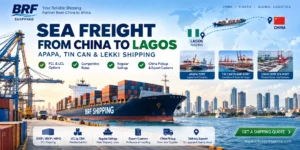
For importers moving commercial cargo from China to Nigeria, sea freight from China to Lagos is one of the most important shipping routes in West Africa.
Machinery, building materials, aluminum products, furniture, automotive parts, solar equipment, textiles, consumer goods and industrial products can all be shipped from major Chinese ports to the Lagos area by FCL container shipping or LCL sea freight.
However, “shipping to Lagos” does not always mean the same destination.
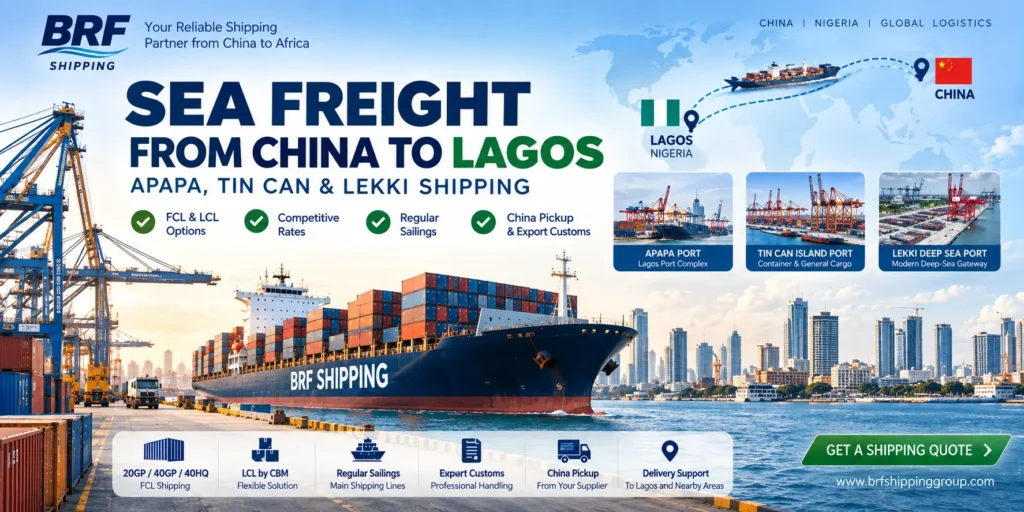
Nigeria’s official port network includes three major Lagos-area gateways:
- Lagos Port Complex — Apapa
- Tin Can Island Port Complex
- Lekki Deep Sea Port
The Nigerian Ports Authority identifies all three as major ports in Lagos State.
Choosing between Apapa, Tin Can Island and Lekki can affect the shipping line, terminal, transit route, inland delivery plan and destination costs.
BRF SHIPPING can coordinate the China side of your Lagos shipment, including supplier pickup, China warehousing, container loading, export customs declaration, FCL or LCL booking and international sea freight.
This guide explains how sea freight from China to Lagos works, which port may suit your cargo and what importers should prepare before the shipment leaves China.
How Does Sea Freight from China to Lagos Work?
A typical China-to-Lagos shipment can follow this process:
China Supplier
↓
Factory Pickup
↓
China Warehouse or Direct Container Loading
↓
Export Customs Declaration
↓
China Export Port
↓
International Ocean Freight
↓
Apapa / Tin Can / Lekki
↓
Nigeria Import Clearance
↓
Inland Delivery
For an EXW shipment, BRF SHIPPING can start the logistics process at the supplier’s factory.
If several suppliers are involved, cargo can first be collected or delivered to a China warehouse for consolidation before export.
For one large supplier shipment, an empty container can often be positioned directly at the factory for loading.
Main China Ports for Shipping to Lagos
China has several major export gateways serving the Nigeria trade.
The most practical origin normally depends on where the supplier is located.
Qingdao to Lagos
Qingdao is a strong choice for factories in Shandong.
Typical cargo includes:
- Machinery
- Aluminum profiles
- Aluminum fencing and gates
- Steel products
- Scaffolding
- Building materials
- Tyres
- Industrial equipment
For factories in Qingdao, Weifang, Linyi, Zibo, Jinan and nearby areas, Qingdao can help reduce unnecessary China domestic trucking.
Shanghai to Lagos
Shanghai serves factories throughout East China, including:
- Shanghai
- Suzhou
- Kunshan
- Wuxi
- Changzhou
- Parts of Jiangsu
Common cargo includes machinery, industrial components, consumer goods and building materials.
Ningbo to Lagos
Ningbo is one of the main gateways for Zhejiang cargo.
Typical supplier locations include:
- Ningbo
- Yiwu
- Hangzhou
- Shaoxing
- Jinhua
- Taizhou
Products frequently shipped through Ningbo include furniture, hardware, household products, auto parts, machinery and plastic goods.
Shenzhen and Guangzhou to Lagos
South China is a major sourcing region for Nigerian importers.
Common supplier locations include:
- Shenzhen
- Guangzhou
- Foshan
- Dongguan
- Huizhou
- Zhongshan
Possible export gateways include Yantian, Shekou and Nansha.
Typical cargo includes electronics, furniture, lighting, aluminum products, machinery, hardware and consumer goods.
How Long Does Sea Freight from China to Lagos Take?
Sea freight transit times depend on the China origin port, carrier, transshipment route and Lagos destination.
Current 2026 market references generally place China-to-Lagos container transit around 30–45 days, although some services can be shorter or longer. September 2026 references for Apapa and Tin Can place some FCL services around 35–38 days, while other current route guides show broader ranges depending on origin and routing.
Typical planning ranges can therefore look like:
| Route | Typical Planning Range |
|---|---|
| Shenzhen / South China → Lagos | About 30–42 days |
| Shanghai → Lagos | About 35–45 days |
| Ningbo → Lagos | About 35–45 days |
| Qingdao → Lagos | About 38–50 days |
| LCL China → Lagos | Usually longer than FCL |
These are planning ranges rather than guaranteed schedules.
Transshipment, vessel changes, port congestion, weather, equipment availability and carrier schedule adjustments can all affect the actual arrival date.
Importers should therefore request the current vessel schedule before confirming a delivery deadline.
Apapa Port Shipping from China
Lagos Port Complex is located in Apapa.
The Nigerian Ports Authority describes Lagos Port Complex as Nigeria’s earliest and largest port and notes that it has road, rail and water connections. The port includes dedicated container operations as well as general and breakbulk terminals.
For many importers, Apapa is therefore one of the first options considered when booking sea freight from China to Lagos.
Typical cargo can include:
- General containers
- Machinery
- Building materials
- Industrial equipment
- Consumer products
- Metal products
- Oversized cargo
The Nigerian Ports Authority also notes that Lagos Port Complex has facilities supporting oversized cargo.
When Should You Use Apapa?
Apapa may be suitable when:
- Your shipping line has a convenient Apapa service
- Your customs broker regularly works with the terminal
- Your final delivery point is convenient to Apapa
- The terminal and inland route fit the cargo
- Your preferred carrier offers suitable equipment and free time
However, port selection should not be based only on habit.
Always compare:
Ocean Freight + Transit Time + Destination Charges + Inland Delivery
before confirming the port.
Tin Can Island Shipping from China
Tin Can Island Port Complex is another major Lagos-area destination.
Official Nigerian Ports Authority terminal information shows Tin Can Island has dedicated container terminals as well as facilities handling containers, general cargo and vehicles.
For China-origin shipments, Tin Can can be an alternative to Apapa depending on the carrier and final destination.
Common China-to-Tin Can cargo includes:
- FCL containers
- Machinery
- Consumer products
- Auto-related cargo
- Furniture
- Construction materials
- Industrial goods
Apapa vs Tin Can Island
Importers often ask:
Is Apapa or Tin Can better for cargo from China?
There is no universal answer.
The better option can change from one shipment to another.
Compare the following factors:
Shipping Line
Some carriers may have better schedules or equipment availability to one terminal.
Ocean Freight
Rates can differ by destination.
Transit Route
One service may be direct while another uses transshipment.
Destination Charges
Terminal and local carrier charges can differ.
Customs Arrangement
Your importer or local agent may have more experience with one terminal.
Inland Delivery
The final Nigerian warehouse location can materially affect trucking time and cost.
Lekki Deep Sea Port Shipping from China
Lekki Deep Sea Port has become an increasingly important Lagos-area gateway.
The Nigerian Ports Authority describes Lekki as a deep-sea port designed in part to increase regional cargo capacity and support transshipment activity.
Lekki is located in the Ibeju-Lekki area, east of central Lagos.
For suitable carrier services, it can provide another option for China-origin container cargo.
Why Consider Lekki Port?
Lekki can be attractive for importers whose cargo and inland distribution network fit the port’s location.
Potential considerations include:
- Modern container infrastructure
- Deep-water capability
- Carrier service availability
- Access to the Lekki industrial and free-zone area
- Final delivery location
- Reduced dependence on traditional Lagos port options for certain cargo
The Nigerian Ports Authority has also reported large container vessels calling at Lekki, including a vessel that originated from Shanghai before calling at Lekki via intermediate ports.
However, this does not mean Lekki is automatically the best port for every China shipment.
The decision should still be based on the live sailing, carrier, terminal charges and inland destination.
Apapa vs Tin Can vs Lekki
A useful comparison looks like this:
| Port | Main Consideration |
|---|---|
| Apapa | Established major Lagos commercial and container gateway |
| Tin Can Island | Major container alternative with multiple terminal operators |
| Lekki | Modern deep-sea option for suitable carrier and inland routes |
The correct choice depends on your cargo and booking.
For example:
A container destined for a warehouse closer to Apapa may not benefit from a slightly cheaper Lekki ocean rate if inland transportation becomes more expensive.
Likewise, a Lekki-area industrial importer may prefer Lekki when the right carrier service is available.
Always compare the total logistics route, not just the port name.
FCL Shipping from China to Lagos
FCL means Full Container Load.
The entire container is booked for one shipper.
Common equipment includes:
- 20GP
- 40GP
- 40HQ
FCL is typically used for larger commercial shipments.
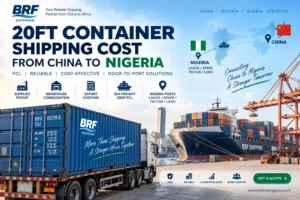
20ft Container to Lagos
A 20GP is particularly useful for dense or heavy cargo.
Typical products include:
- Machinery
- Steel
- Aluminum products
- Hardware
- Tiles
- Auto parts
- Industrial components
For detailed pricing, importers should compare a dedicated 20ft Container Shipping Cost from China to Nigeria quotation because rates change by origin port, Lagos terminal and sailing week. BRF SHIPPING’s dedicated 20GP guide explains the main China-origin and Nigeria-destination cost factors.
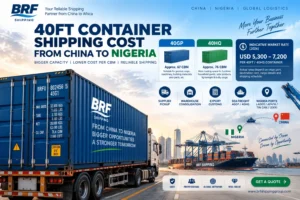
40ft and 40HQ Containers to Lagos
For larger-volume shipments, a 40GP or 40HQ can offer a lower freight cost per cubic meter.
40HQ containers are especially common for:
- Furniture
- Fencing
- Gates
- Building panels
- Plastic products
- Retail goods
- Household products
- Lightweight industrial cargo
BRF SHIPPING’s dedicated 40ft Nigeria guide covers current 40GP and 40HQ planning considerations for Apapa, Tin Can and Lekki shipments.
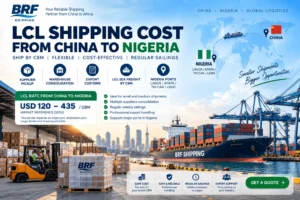
LCL Shipping from China to Lagos
LCL means Less than Container Load.
Instead of paying for an entire container, the importer pays for space inside a shared container.
The process normally looks like:
Supplier
→ China Warehouse / CFS
→ Consolidation
→ Export Customs
→ Shared Container
→ Lagos CFS
→ Deconsolidation
→ Cargo Release
LCL can be suitable for:
- 1 CBM
- 3 CBM
- 5 CBM
- 8 CBM
- Other relatively small commercial shipments
As cargo becomes larger, always compare LCL with a 20GP.
The total LCL cost can rise considerably once China CFS and Lagos deconsolidation charges are included.
FCL or LCL: Which Is Better for Lagos?
A simple planning guide is:
| Cargo Volume | Option to Compare |
|---|---|
| 1–5 CBM | Usually LCL |
| 5–10 CBM | LCL |
| 10–15 CBM | Compare LCL and 20GP |
| 15+ CBM | Strongly compare FCL |
| Large-volume cargo | 40GP / 40HQ |
This is not a universal rule.
Current freight rates, destination charges and cargo density can change the break-even point.
China Factory Pickup for Lagos Shipments
Many Chinese suppliers quote products on EXW terms.
Under EXW, the buyer may need to arrange transportation from the factory.
BRF SHIPPING can coordinate:
- Factory pickup
- Container trucking
- LCL collection
- Warehouse delivery
- Multi-supplier consolidation
For example:
Linyi Factory → Qingdao Port → Lagos
or:
Yiwu Supplier → Ningbo CFS → Lagos
or:
Foshan Factory → Nansha Port → Lagos
Choosing a sensible origin port can significantly reduce China inland transportation.
Multi-Supplier Consolidation
Nigeria importers frequently purchase from several Chinese suppliers.
For example:
Supplier A — Guangzhou
Supplier B — Foshan
Supplier C — Dongguan
Supplier D — Yiwu
Rather than managing several separate international shipments, the cargo can be routed to a consolidation warehouse.
The process becomes:
Supplier Collection
→ China Warehouse
→ Package Check
→ Measurement
→ Consolidation
→ FCL or LCL
→ Lagos
This can simplify documentation and make international freight easier to manage.
China Export Customs
Commercial cargo must complete China export procedures before leaving the country.
The shipment normally requires accurate information such as:
- Commercial invoice
- Packing list
- Product description
- HS classification information
- Quantity
- Gross weight
- Exporter details
- Consignee details
Incorrect cargo descriptions or documentation can delay export customs release.
BRF SHIPPING can coordinate China-origin export handling together with pickup, warehouse operations and international shipping.
Nigeria Import Preparation
Importers should prepare Nigeria-side requirements before the vessel arrives.
Nigeria Customs’ published import process includes pre-shipment preparation, Form M, issuance of the Pre-Arrival Assessment Report (PAAR), submission of the Single Goods Declaration (SGD), duty/tax assessment and customs release procedures.
Product-specific regulatory documents may also apply.
For example, Nigeria Customs notes that regulatory certificates such as SONCAP can be required where applicable.
Importers should therefore confirm commodity-specific requirements with their Nigerian customs representative before the cargo leaves China.
Is Nigeria Customs Clearance Included?
Not automatically.
For BRF SHIPPING, the core China-to-Lagos service can focus on:
China Factory Pickup
→ Warehouse / Consolidation
→ Export Customs
→ FCL or LCL Booking
→ Ocean Freight
→ Lagos Port
Nigeria customs clearance, taxes, duties and inland delivery should only be considered included if specifically stated in the quotation.
This is particularly important because destination requirements vary by importer and commodity.
Lagos Destination Charges
Ocean freight is not the same as total landed cost.
Importers may need to budget for:
- Terminal handling
- Shipping-line destination charges
- Delivery order
- Customs broker
- Customs duty
- Taxes and levies
- Inspection
- Storage
- Demurrage
- Detention
- Inland trucking
This is why the cheapest ocean freight rate does not always produce the cheapest total shipment.
Demurrage and Detention
For FCL shipments, two important risks are:
Demurrage
Demurrage can apply when the container remains inside the terminal beyond the available free period.
Detention
Detention can apply when the container has left the terminal but is not returned to the carrier within the agreed free time.
To reduce these costs:
- Prepare import documents before ETA
- Confirm customs broker arrangements
- Track vessel arrival
- Arrange inland transportation
- Prepare unloading equipment
- Confirm empty-container return procedures
Good destination planning can sometimes save more money than negotiating another small reduction in ocean freight.
Typical Cargo Shipped from China to Lagos
China-to-Lagos sea freight supports a broad range of commercial goods.
Machinery
Manufacturing equipment, pumps, compressors, motors and spare parts.
Building Materials
Aluminum products, fencing, gates, panels, scaffolding and hardware.
Solar Products
Solar equipment and associated products subject to regulatory and transport requirements.
Furniture
Home, office and hospitality furniture.
Automotive Parts
Components, accessories, workshop products and related cargo.
Consumer Goods
Household products, retail inventory and general merchandise.
Textiles
Fabric, garments and commercial textile shipments.
Special Cargo
Special commodities require advance review.
Examples include:
- Batteries
- Chemicals
- Liquids
- Powders
- Dangerous goods
- Oversized machinery
- Long cargo
- Heavy cargo
Do not send special cargo to a warehouse using a generic product description.
Provide the actual commodity information, photos and SDS/MSDS where applicable before booking.
How to Choose a China to Lagos Freight Forwarder
A China-to-Lagos freight forwarder should be able to coordinate more than the international ocean rate.
Important capabilities include:
- Communication with suppliers
- Factory pickup
- China warehousing
- Multi-supplier consolidation
- Export customs
- FCL booking
- LCL consolidation
- Container loading
- Shipping documentation
- Vessel tracking
- Destination-agent coordination
The more of these steps that are coordinated together, the easier it becomes to identify where a delay or unexpected charge occurred.
Shipping from China to Lagos: Step-by-Step
Step 1 — Send Cargo Information
Provide:
- Supplier address
- Product
- Package quantity
- Dimensions
- Weight
- CBM
- Cargo-ready date
- Destination
Step 2 — Choose FCL or LCL
Compare shipment volume and total cost.
Step 3 — Select China Origin Port
Match the supplier location with Qingdao, Shanghai, Ningbo, Shenzhen, Guangzhou or another practical gateway.
Step 4 — Select Lagos Port
Compare Apapa, Tin Can and Lekki based on the live carrier service.
Step 5 — Pickup and Loading
Arrange supplier pickup, warehouse receiving or direct container loading.
Step 6 — Export Customs
Prepare China export documentation.
Step 7 — Ocean Freight
Container or LCL cargo departs China.
Step 8 — Track the Vessel
Monitor ETD, transshipment and ETA.
Step 9 — Nigeria Import Procedures
The importer or appointed customs representative handles the agreed destination process.
Step 10 — Inland Delivery
Once released, cargo can move to the final warehouse under the separately agreed delivery arrangement.
Frequently Asked Questions
How long does sea freight from China to Lagos take?
A practical 2026 planning range is generally around 30–45 days port-to-port, depending on China origin, carrier, routing, transshipment and Lagos destination. Some September 2026 services to Apapa and Tin Can are quoted around 35–38 days.
Which Lagos port is best for China cargo?
There is no single best port. Apapa, Tin Can and Lekki should be compared according to shipping-line service, cargo, inland destination and local handling requirements.
Is Apapa the same as Lagos Port?
Lagos Port Complex is located in Apapa and is commonly referred to as Apapa Port or Apapa Quays. The Nigerian Ports Authority describes it as Nigeria’s earliest and largest port.
Does Tin Can handle containers?
Yes. Nigerian Ports Authority records show several Tin Can Island terminals handling container cargo.
Can container ships call at Lekki?
Yes. Lekki is a deep-sea port, and the Nigerian Ports Authority has documented large container vessels calling there.
Can BRF SHIPPING collect cargo from Chinese factories?
Yes. BRF SHIPPING’s China-to-Nigeria service includes China pickup, warehouse coordination, export customs and international freight planning.
Can several suppliers be combined into one shipment?
Yes. Multiple suppliers can be consolidated in China and exported as LCL or loaded into one FCL container.
Is Nigeria customs clearance included?
It should not be assumed to be included. Clearance, duties, taxes and local delivery are included only when explicitly stated in the written quotation.
Get a Sea Freight Quote from China to Lagos
If you are planning sea freight from China to Lagos, provide BRF SHIPPING with:
- China supplier location
- Product name
- HS code if available
- Package quantity
- Dimensions
- Gross weight
- Total CBM
- FCL or LCL requirement
- Preferred Nigeria port
- Cargo-ready date
- Incoterm
We can then compare a suitable route from the China supplier to:
Apapa
Tin Can Island
or
Lekki Deep Sea Port
depending on the cargo and current sailing.
BRF SHIPPING
China Pickup · Warehouse Consolidation · Export Customs · FCL · LCL · Sea Freight from China to Lagos
For the best route, compare the complete logistics plan rather than choosing a Nigerian port or shipping line based only on the lowest ocean freight rate.