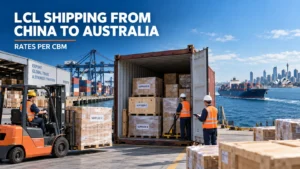
A vessel arriving at Sydney, Melbourne, Brisbane, Fremantle or Adelaide does not mean the cargo is immediately ready for collection.
After the ship berths, the container must be discharged, made available by the terminal, cleared from customs and biosecurity control, collected within the available free time and delivered to the importer’s warehouse or project site.
A delay at any one of these stages can create additional expenses, including inspection fees, biosecurity treatment, terminal storage, container demurrage, detention, transport waiting time and unsuccessful-delivery charges.
For importers using shipping services from China to Australia, understanding what happens after arrival is essential for controlling costs and arranging reliable final delivery.
This guide focuses specifically on:
- Australian customs examinations
- Biosecurity inspections and quarantine directions
- Terminal and depot storage
- Container demurrage and detention
- FCL and LCL cargo availability
- Port collection problems
- Final-mile delivery delays
- Practical steps to reduce destination risks
For information about import declarations, GST, customs duty and importer requirements, read our separate Australia customs clearance and door-to-door delivery guide.
Cargo Arrival Is Not the Same as Cargo Availability
The estimated vessel arrival date is only one milestone in the shipping process.
Even when tracking information shows that a vessel has arrived, the cargo may still be unavailable because:
- The vessel is waiting for a berth
- The container has not been discharged
- The terminal has not completed its availability process
- The shipping line has not released the cargo
- The original bill of lading has not been surrendered
- Destination charges remain unpaid
- Customs status has not been released
- Biosecurity directions remain outstanding
- The container has been selected for inspection
- The container is blocked by terminal operations
- An LCL shipment has not been deconsolidated
- The transport company has no collection appointment
- Delivery instructions are incomplete
Importers should therefore avoid scheduling warehouse labour, installation teams or customers based only on the vessel’s estimated arrival date.
The correct delivery plan should be based on confirmed cargo availability and final government release.
Understanding Australian Customs and Biosecurity Holds
Cargo imported into Australia may be controlled by more than one government authority.
The Australian Border Force manages customs-related matters, including import declarations, customs values, tariff classification, duties, restrictions and customs examinations.
The Department of Agriculture, Fisheries and Forestry manages biosecurity risks associated with imported goods, packaging materials, containers, timber, soil, insects, plants, animal products and other regulated materials.
A shipment may receive release from one authority while remaining held by another.
For example:
- Customs may release the import declaration while biosecurity inspection is still required.
- Biosecurity documentation may be acceptable while customs requests additional valuation or product information.
- The shipping line may release the bill of lading while government holds remain active.
- Both government authorities may release the cargo while the terminal has not yet made the container available.
This is why “customs cleared” does not always mean “ready for delivery.”
1. Australian Customs Examination Delays
An import declaration may be selected for additional review or physical examination by the Australian Border Force.
Possible reasons include:
- Incomplete or inconsistent commercial documents
- A vague product description
- Incorrect tariff classification
- Questions about customs value
- Country-of-origin concerns
- Missing permits or approvals
- Restricted or controlled goods
- Intelligence-based targeting
- Random or compliance-based examination
- Discrepancies between the declaration and cargo
When an examination is required, the container or cargo may need to be moved to an approved examination location. The importer may incur costs for transport, unpacking, examination assistance, storage and repacking.
Documents Commonly Requested
Depending on the reason for the customs hold, the broker may need to provide:
- Commercial invoice
- Packing list
- Bill of lading or air waybill
- Purchase contract
- Proof of payment
- Product specifications
- Catalogue or product photographs
- Tariff-classification information
- Certificate of Origin
- Import permit
- Treatment certificate
- Manufacturer’s declaration
Documents should use consistent product descriptions, quantities, values and shipment references.
For example, if the commercial invoice describes a product as “metal parts” while the packing list says “aluminum fence panels,” the inconsistency may cause additional questions.
2. Biosecurity Inspection and Quarantine Delays
Australia applies strict biosecurity controls to protect its environment, agriculture and natural resources.
The Department of Agriculture, Fisheries and Forestry states that imported goods must meet all applicable import conditions before being released from biosecurity control. Some shipments can be cleared through documentary assessment, while others must undergo inspection. Cargo released through documents may still be selected for Cargo Compliance Verification.
Products more likely to attract biosecurity attention include:
- Timber products
- Wooden furniture
- Solid timber packaging
- Bamboo products
- Used machinery
- Agricultural equipment
- Vehicles and tyres
- Outdoor furniture
- Building materials
- Food products
- Plant or animal products
- Goods contaminated with soil
- Cargo packed with unacceptable materials
A biosecurity direction can require:
- Document assessment
- External container inspection
- Rural tailgate inspection
- Container unpack inspection
- Commodity inspection
- Cleaning
- Fumigation
- Heat treatment
- Destruction
- Re-export
- Further laboratory or technical assessment
Inspection availability can also affect the release time. When an appointment is required, the cargo cannot progress until the inspection has been booked and completed.
Why a Packing Declaration Matters
Containerized cargo may require documentation confirming the packaging materials used and, for applicable FCL/X shipments, container cleanliness.
Common document problems include:
- Packing declaration issued by the wrong entity
- Missing company address
- Missing signature
- No connection to the container or shipment
- Incorrect timber declaration
- Missing treatment certificate
- Conflicting answers
- Outdated wording
- Incorrect container-cleanliness statement
- LCL supplier declaring cleanliness of a container it did not control
These errors can cause inspections or requests for corrected documentation.
Before loading, suppliers should follow the instructions in our guide on how to complete an Australia Packing Declaration Form.
Commodity-specific conditions should also be checked through the official Biosecurity Import Conditions system.
3. Rural Tailgate Inspection
The final delivery postcode can affect the biosecurity process.
Australia uses delivery-postcode classifications to determine whether a location is suitable for unpacking imported cargo. If a container is destined for a classified rural area, it may be directed for a rural tailgate inspection before leaving the metropolitan port area.
During a tailgate inspection, an authorised officer may assess the container and cargo for visible contamination or biosecurity risks.
This can affect:
- The permitted delivery route
- The inspection location
- Truck scheduling
- Container collection time
- Delivery appointments
- Additional transport and inspection costs
The delivery postcode should therefore be provided to the customs broker and freight forwarder before arrival—not after the container has already been collected.
4. Seasonal Biosecurity Measures
Some imported cargo is subject to seasonal measures, depending on:
- Country of origin
- Shipping date
- Commodity
- Container type
- Treatment date
- Treatment provider
- Vessel schedule
- Applicable BICON conditions
Brown marmorated stink bug measures are one example of seasonal controls that may affect targeted goods and vessels during the relevant season.
Where offshore treatment is required, documents must match the shipment and treatment conditions. A treatment certificate with an incorrect container number, treatment date, dosage, exposure period or provider information can result in additional assessment or treatment after arrival.
Importers should confirm seasonal measures before the cargo is packed because onshore treatment is usually more expensive and can cause significant delays.
5. Container Contamination
A container can be held even when the products themselves are permitted.
Biosecurity contamination may be found:
- Inside the container
- On the container floor
- Around the door seals
- On pallets or timber dunnage
- Under machinery
- Inside used equipment
- On tyres
- On the external container structure
- On the container undercarriage
Examples of contamination include:
- Soil
- Mud
- Seeds
- Grain
- Leaves
- Insects
- Egg masses
- Snails
- Animal material
- Plant residue
- Standing water
Factories should inspect containers before loading and reject visibly contaminated equipment. Cargo photographs and loading records can help identify how the goods and container were prepared.
6. Port and Terminal Storage Charges
Once a container has been discharged and made available, the terminal normally allows a limited period for collection.
If the cargo is not collected within the applicable period, terminal storage charges may begin to accumulate.
Storage can occur because:
- Government clearance is incomplete
- The shipping line has not released the cargo
- Destination charges are unpaid
- The terminal collection slot is unavailable
- A transport company was booked too late
- The importer has not supplied delivery instructions
- The warehouse cannot receive the container
- An inspection or treatment is pending
- Weekends or public holidays reduce the available collection window
Storage tariffs and free periods vary by terminal, depot, shipping line, cargo type and contract. Importers should request the actual availability date and last free collection date rather than assuming the free period starts from the vessel’s estimated arrival.
Terminal Storage, Demurrage and Detention: What Is the Difference?
These charges are often confused, but they do not necessarily refer to the same event.
Terminal or Wharf Storage
Terminal storage is generally charged when cargo remains at the terminal or depot beyond its allowed storage period.
It may be charged by:
- Container terminal
- Wharf operator
- LCL depot
- Container freight station
- Approved Arrangement facility
Container Demurrage
Demurrage commonly refers to shipping-line charges when an import container remains under the carrier’s control beyond the permitted free time.
Depending on the carrier’s tariff and contract, demurrage may apply while the container remains at the terminal or before it is collected.
Container Detention
Detention generally applies after the full container has been collected from the terminal but is not returned empty to the shipping line’s nominated depot within the allowed period.
For example, detention may arise when:
- The warehouse cannot unload the container
- The delivery site is closed
- Labour or equipment is unavailable
- The container is held at the consignee’s premises
- The empty-return depot changes
- The nominated depot refuses the return
- The return appointment is missed
Carrier terminology and tariffs can vary. The applicable shipping-line quotation and destination tariff should always be checked.
Why Several Charges Can Apply Together
A delayed container may incur more than one cost.
For example:
- The container is discharged.
- Biosecurity inspection is required.
- Terminal storage begins while the container waits.
- The container is transferred to an inspection facility.
- Inspection, transport and facility charges apply.
- After release, the container is delivered.
- The importer takes too long to unload it.
- Container detention begins before empty return.
This is why a low ocean freight rate does not always mean a low total landed logistics cost.
7. LCL Deconsolidation and Depot Delays
LCL cargo follows a different destination process from FCL cargo.
After arrival, the master container must normally be:
- Discharged from the vessel
- Transferred to a container freight station
- Unpacked
- Separated into individual consignments
- Matched with house bills of lading
- Processed for customs and biosecurity release
- Made available for collection or delivery
An LCL shipment can be delayed even when the vessel has arrived because the master container has not yet been unpacked.
Other LCL delays include:
- Missing house bill details
- Manifest discrepancies
- One consignment affecting access to the master container
- Depot congestion
- Biosecurity directions
- Unpaid destination charges
- No collection booking
- Pallet or cargo damage requiring investigation
LCL importers should wait for a formal availability notice before arranging collection.
Depot storage conditions should also be checked because free-time rules for LCL cargo can differ from FCL container rules.
8. Transport Booking and Port Collection Problems
Government release alone does not move the cargo.
The container still needs a truck, collection appointment and valid terminal information.
Transport delays may be caused by:
- Limited truck availability
- Port congestion
- Late cargo release
- Missed terminal slots
- Incorrect container details
- Vehicle-booking-system restrictions
- Heavy container requirements
- Chain-of-responsibility limits
- Empty-return depot changes
- Weekend or public-holiday schedules
- Road restrictions
- Delivery-site access restrictions
Transport should not be confirmed solely from the vessel ETA. However, the trucking company should receive advance notice so equipment and driver availability can be planned once release is confirmed.
9. Final-Mile Delivery Delays
The final delivery stage can fail even after the cargo has cleared customs and biosecurity controls.
Common final-mile problems include:
- Incorrect delivery address
- No receiving appointment
- Warehouse closed on arrival
- No forklift available
- No loading dock
- Insufficient space for a container truck
- Residential access restrictions
- Weight or height restrictions
- Long cargo that cannot be unloaded safely
- Construction-site induction requirements
- Driver waiting time
- No labour available
- Customer asks the driver to assist with unloading
- Tailgate truck requested too late
Before delivery, BRF SHIPPING confirms the cargo type, delivery postcode and unloading conditions as part of our door-to-door shipping service from China.
FCL Delivery Questions
For a full-container shipment, confirm:
- Can a container truck access the site?
- Is live unloading permitted?
- How long will unloading take?
- Is a loading dock available?
- Is a side loader required?
- Can the container remain overnight?
- Who is responsible for empty return?
- What is the last free return date?
LCL Delivery Questions
For loose cargo, confirm:
- Number of pallets or packages
- Dimensions of the longest package
- Weight of the heaviest package
- Whether cargo is stackable
- Whether a forklift is available
- Whether a tailgate truck is required
- Whether delivery is commercial or residential
- Whether an appointment is required
Long aluminum fence panels, gates, acoustic barriers, scaffolding and machinery may need special trucks or unloading equipment.
What Happens During an Australia Cargo Inspection?
The exact process depends on the authority and inspection type, but it may include:
- A hold or direction is issued.
- The broker or destination agent receives the notification.
- Supporting documents are submitted.
- The container is booked for inspection.
- Cargo is moved to the required facility if necessary.
- The container or packages are opened.
- Officers examine the goods, packaging or container.
- Further information, cleaning or treatment may be requested.
- The authority reviews the inspection result.
- Cargo is released or receives additional directions.
- Transport and final delivery are rearranged.
The importer should not promise a final delivery date until the inspection is completed and the cargo has received all required releases.
Who Pays Inspection, Storage and Delay Charges?
Responsibility depends on the sales contract, Incoterm, freight quotation and reason for the charge.
Potential destination charges may include:
- Customs-broker fees
- Biosecurity assessment
- Government inspection
- Examination-facility fees
- Container transport
- LCL depot handling
- Unpack and repack labour
- Cleaning
- Fumigation or treatment
- Terminal storage
- Shipping-line demurrage
- Container detention
- Truck waiting time
- Failed-delivery charges
- Redelivery
- Empty-container return
Importers should check whether the quotation is:
- Port-to-port
- Port-to-door
- DAP
- DDP
- Inclusive or exclusive of inspections
- Inclusive or exclusive of storage
- Inclusive or exclusive of waiting time
- Subject to shipping-line free time
No freight forwarder can guarantee that government examination, inspection, treatment, demurrage or storage charges will never occur.
A reliable logistics plan should explain which charges are included and which destination events remain subject to actual occurrence.
How to Reduce Cargo Delays After Arrival in Australia
Before the Cargo Is Packed
- Confirm the exact product description
- Check the applicable BICON conditions
- Verify whether permits are required
- Identify timber, bamboo or other packaging
- Confirm seasonal biosecurity measures
- Use clean and compliant packaging
- Plan the correct Australian entry port
Before Container Loading
- Inspect the container for soil, insects and plant material
- Photograph the empty container
- Verify timber treatment and ISPM 15 marks
- Avoid unacceptable packaging materials
- Confirm package dimensions and weights
- Record the container number and seal number
Before Vessel Departure
- Prepare the commercial invoice
- Prepare the packing list
- Complete the Australia Packing Declaration
- Obtain treatment certificates where required
- Check the bill of lading instructions
- Send documents to the importer and broker
Before Vessel Arrival
- Lodge the import declaration
- Submit biosecurity documents
- Confirm shipping-line release requirements
- Pay applicable destination charges
- Check cargo availability
- Confirm the delivery postcode
- Place the trucker on advance notice
- Verify the warehouse receiving schedule
After Cargo Release
- Book the earliest practical collection slot
- Confirm the last free terminal date
- Confirm the last free empty-return date
- Check the nominated empty depot
- Arrange unloading labour and equipment
- Monitor container return
- Retain delivery and return records
BRF SHIPPING Australia Destination Coordination
BRF SHIPPING coordinates China-origin and Australian destination operations under one shipment plan.
Our services can include:
- Supplier pickup in China
- China warehouse receiving and consolidation
- FCL and LCL booking
- Container loading
- Export customs declaration
- Commercial document review
- Packing Declaration coordination
- Ocean or air freight
- Australian broker coordination
- Biosecurity-document support
- Inspection communication
- Port or depot collection
- Sydney, Melbourne, Brisbane and Perth delivery
- Tailgate truck planning
- Container free-time monitoring
- Empty-container return coordination
The exact service scope depends on the cargo, Incoterm, importer arrangement, customs requirements, biosecurity conditions and final delivery postcode.
Frequently Asked Questions
Why is my container still unavailable when the vessel has arrived?
The vessel may not have berthed, the container may not have been discharged, the terminal may not have made it available, or customs, biosecurity or shipping-line holds may remain active.
How long does an Australian cargo inspection take?
There is no universal inspection time. Timing depends on the type of direction, appointment availability, facility capacity, cargo complexity, document quality and whether cleaning, treatment or additional assessment is required.
Can cargo be released by customs but held by biosecurity?
Yes. Customs and biosecurity are separate controls. A shipment may be released by one authority while remaining subject to a hold or direction from another.
What is a rural tailgate inspection?
A rural tailgate inspection is a biosecurity risk assessment that may be required before an import container is moved to a classified rural unpack destination.
Are terminal storage and container demurrage the same?
Not necessarily. Terminal storage is generally charged by the terminal or depot for cargo remaining beyond its storage period. Demurrage is generally a shipping-line container charge. The actual terminology and calculation depend on the carrier and terminal tariffs.
What is container detention?
Detention generally applies when a full container has left the terminal but is not returned empty to the nominated depot within the permitted free time.
Can BRF SHIPPING guarantee no inspection charges?
No freight forwarder can guarantee that government authorities will not select a shipment for examination or biosecurity inspection. BRF SHIPPING can reduce avoidable risks through document review, packaging checks and pre-arrival coordination.
When should final delivery be booked?
Planning should begin before arrival, but the final delivery should be confirmed only after cargo availability, government release and transport arrangements are sufficiently clear.
Get Support for Delayed Cargo in Australia
If your cargo is being shipped from China to Australia, send BRF SHIPPING:
- Bill of lading
- Commercial invoice
- Packing list
- Arrival notice
- Packing Declaration
- Treatment certificate
- Container number
- Cargo status or inspection notice
- Australian delivery postcode
- Required delivery date
- Unloading conditions
Our team can review the available information and coordinate with the appointed shipping line, customs broker, biosecurity service provider, transport company and receiving location.
Contact BRF SHIPPING for China-to-Australia freight, customs coordination and door-delivery support.
This article provides general logistics information. Inspection requirements, free time, government directions and destination charges vary by shipment, terminal, carrier, cargo and delivery location. Confirm current instructions with the responsible Australian authority, customs broker, shipping line and terminal.